The Democratic Party, according to most observers, failed to deliver the right messaging to help elect Kamala Harris last November.
The reasons underlying her defeat to Donald Trump run the gamut. Harris turned down too many interviews with press. She leaned too much on the I’m-not-Trump campaign messaging. She didn’t adequately address what some felt were the elitist undertones of her Bay Area upbringing. She failed to, as the exit polls showed, connect honestly and viscerally with the American working class. (Except for white women.)
“I don’t like to call it an ‘autopsy,’ because our party’s not dead—we’re still alive and kicking,” Ken Martin, the Democratic party chair told TIME in May. “Maybe barely, but we are.”
So, what, oh what are the Democrats to do?
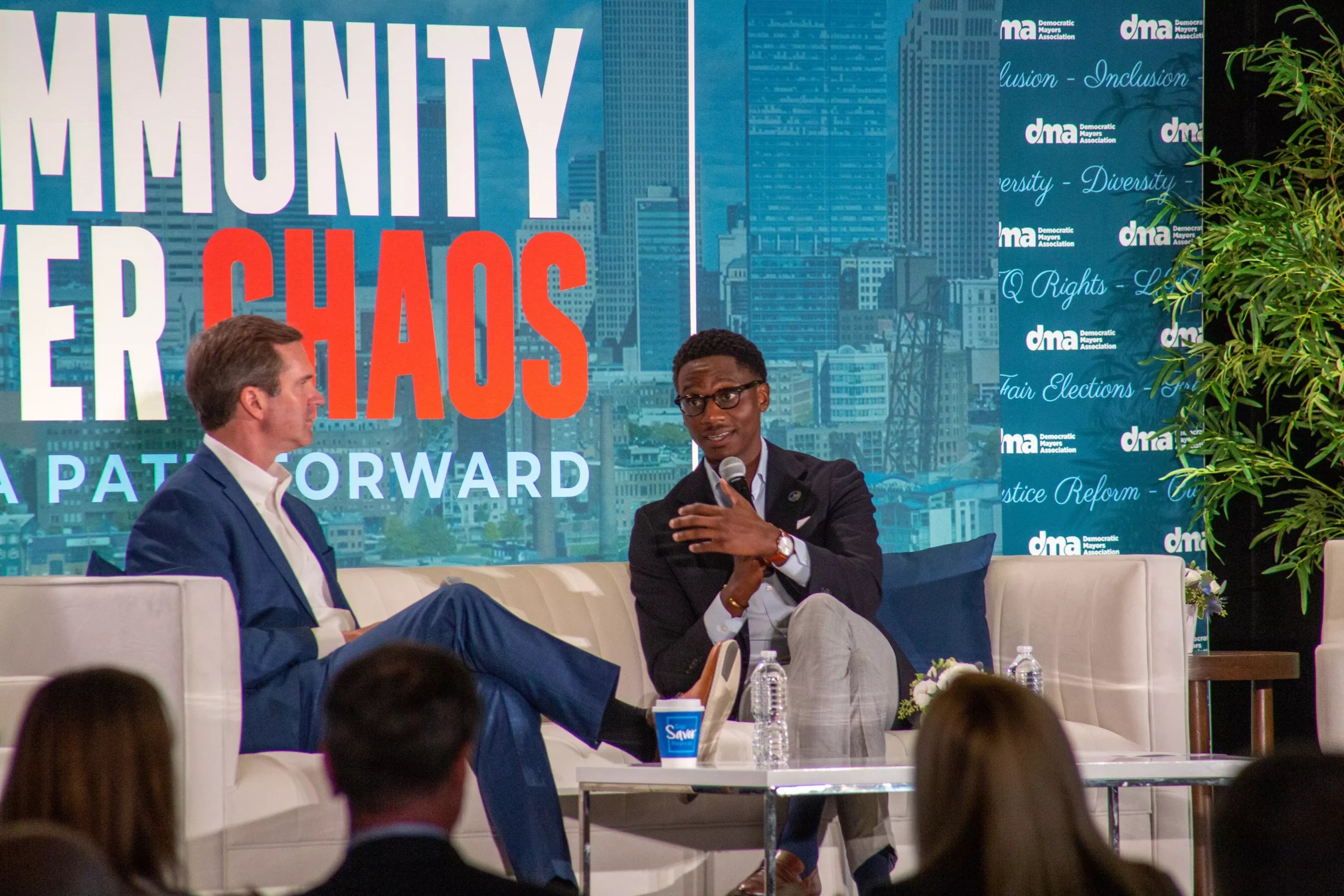
That seemed to be the question front-and-center at the start of this year’s Democratic Mayors Association summit, which Mayor Justin Bibb, also the president of the DMA, hosted this past weekend in Cleveland. Friday was the kickoff day to brainstorm around the conference’s potential spirit of unification (and working subtitle): “Community Over Chaos.”
A ballroom full of true-blue mayors, from Kentucky to Los Angeles, felt that if Democrats were to win back the trust of the American people—especially in 2026’s midterm elections—they would have to open up their Instagrams, hit the streets, use the people’s lexicon and throw heaps of local dollars into Main Streets and downtowns.
In other words, be as authentic as a city leader can be.
Which, as DNC Chair Ken Martin framed it from behind the podium on Friday, rested in what really is, he said, the frontline of today’s Democratic Party.
“Being a mayor isn’t an abstract job; it’s as real as it gets,” Martin told the room. “Mayors drive on the same roads, they go around the same potholes, they send their kids to the same schools and enjoy the same parks as everybody else.”
“With mayors, there’s no six degrees of gilded separation,” he said. “You’re your own town. You’re your city. You are your community. And this DNC will be different than the last DNC.”

Martin’s rallying cry, and supposed boost behind a needed reboot for his party, may be all the Democrats can cling onto for the time being. As of today, Republicans control the White House, the House, the Senate and occupy a majority on the U.S. Supreme Court. The same goes for the Ohio Statehouse. (And probably most statehouses overseeing the cities represented on Friday.)
Trump’s Big Beautiful Bill, the $3.4 trillion, decade-long spending behemoth that made gargantuan cuts to Medicaid and SNAP, made unification a necessity. Bibb himself has spoken to press lately about how local donors and institutions will have to take the place of large amounts of dollars that otherwise would’ve come from the Feds—from backing affordable housing to funding food banks and supporting violence prevention.
All issues speakers of the DMA said mayors can not figure out funding for, but can communicate the effects of.
“We need to focus on impact over insults, delivery over DOGE,” Nashville Mayor Freddie O’Connell said amongst a panel of four other mayors. “What we have to do is showcase people watching that the values are working on the ground.”
Showcase being a tough tactic for Democrats coming out of 2024.
But in the age of Zohran Mamdani, the self-professed 34-year-old Democratic Socialist running for New York’s mayor seat, the right communication may be key to resurrection.
Friday’s summit gave a few ideas: talk low homicide rates on Top 40 radio; take selfies at ribbon cuttings; disperse good news on your Instagram channel; show off, as Bibb is wont to do, your millions (or billions) of reinvestment in your downtown.
“I had a few people tell me, after I posted this one video, ‘Don’t use dope. Don’t use the word,’” Durham Mayor Leo Williams said. “But I’m gonna say, ‘Durham is dope and he is why’. The key thing is messaging.”
As long as that messaging, several pointed out on Friday, leads to an actual something.
That goes for Mamdani himself, who is promising to provide free bus rides and free childcare to New Yorkers if he wins in September. Or for Bibb himself, who has long promised Clevelanders that his vision for the lakefront can be actualized, even with the Browns leaving and a reliance on federal dollars coming through. ($960,000 more are, it turns out, as Congresswoman Shontel Brown announced.)
Kentucky Governor Andy Beshear, in his interview with Bibb, agreed with the political image push on mayors—mayors have to not only help save those at risk from Medicaid cuts or missing food stamps, but be there as a kind of frontline to the Democratic Party of the future.
“People need to see the Democratic Party for the ground results that you all get every day,” Beshear told Bibb.
“When you elect a Democrat, we will work to better your lives—we will work our tails off to make your life better,” he said. “That’s what we need to be saying.”
Subscribe to Cleveland Scene newsletters.
Follow us: Apple News | Google News | NewsBreak | Reddit | Instagram | Facebook | Twitter | Or sign up for our RSS Feed
This article appears in Cleveland SCENE 7/16/25.