

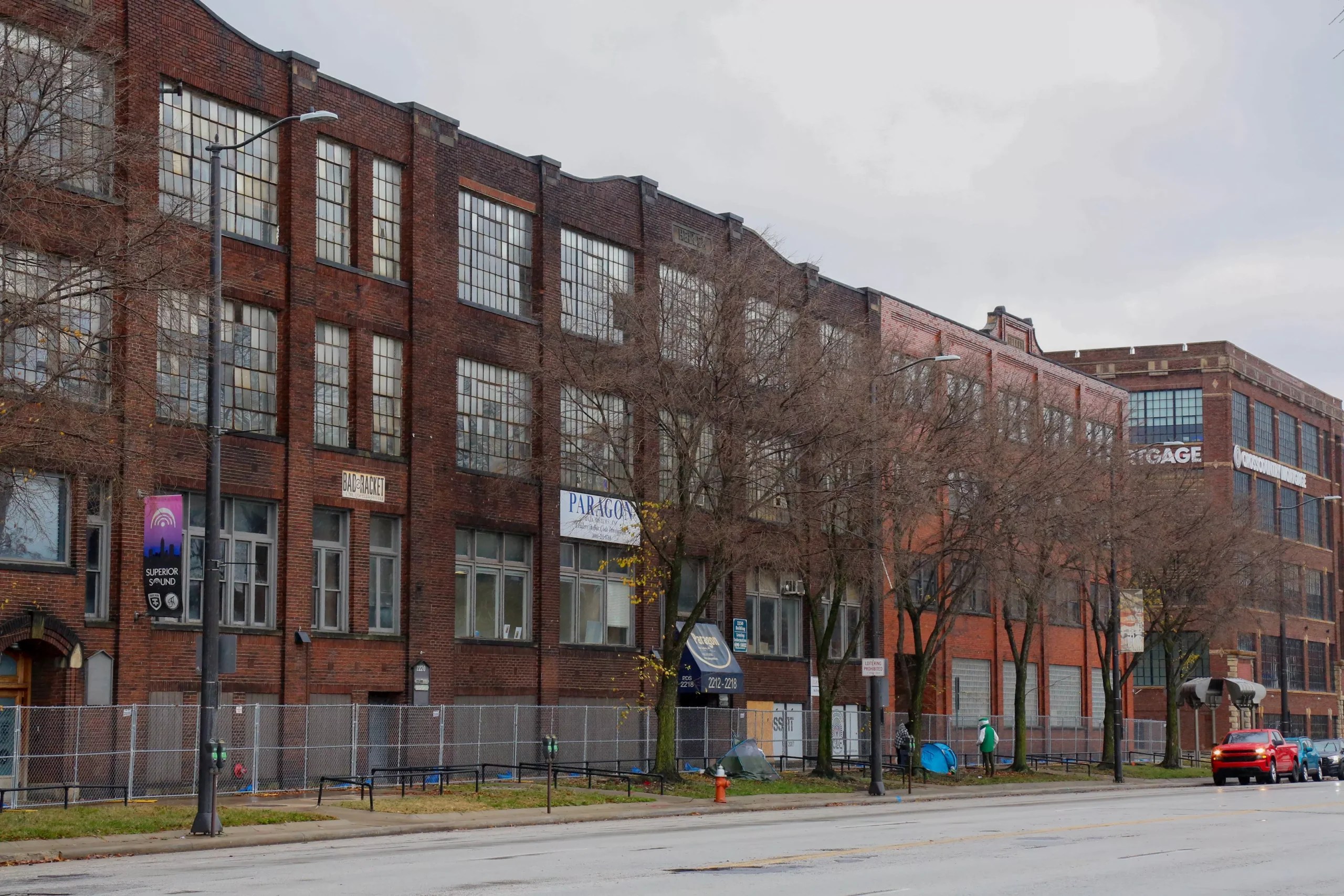
The 56-year-old man was discharged from a local hospital on the evening of December 4 and brought to 2100 Lakeside men’s homeless shelter.
He got out of the car, but never entered the shelter. He was found the next morning a couple of blocks away, at the corner of East 18th and St. Clair, where he apparently froze to death. (The Cuyahoga County Medical Examiner is still finalizing the cause of death.)
It was during a major winter storm with Lake Effect snow and an Arctic cold front. Schools closed and weather advisories were issued as temperatures that night dropped to the low 20s.
For Knight and other unsheltered people, the harsh winds made it feel like less than 20 degrees in downtown Cleveland. The father of two sat on a sidewalk and waited for the warmth of a sunrise that would never come.
His heartbreaking story is unfortunately not unique.
“There’s so many incidents like that,” said Dennis Ashton, a street outreach worker with NEOCH, the Northeast Ohio Coalition for the Homeless. “That’s just the first one this year.”
Every year, members of Cleveland’s homeless community die on the streets. Winter is particularly harsh, of course, especially for unsheltered people. According to Cuyahoga County estimates, about 500 of the approximately 5,000 homeless people in the county are unsheltered, meaning they spent most or all of their days and nights on the streets. And the problem is growing both nationally and locally — the US Department of Housing and Urban Development recently released updated stats showing an 18% rise in unhoused people across the country at the start of 2024.
NEOCH holds an annual Homeless Memorial on the Winter Solstice – the longest night of the year – to honor those who have passed. On Saturday, Dec. 21, the memorial was held at St. Augustine Hunger Center in Tremont and commemorated Mr. Knight along with 84 others who died this year at shelters, in permanent supportive housing, or on the streets.

How can this happen? How are there gaps in our social services that allow for our neighbors to die on the streets?
The answer isn’t simple. But local advocates are hopeful that innovative programs can help provide long-term solutions.
The two main shelters in the city are 2100 Lakeside for men and Norma Herr for women, and both operate overflow facilities so they never turn anyone away due to capacity. A newly renovated wing of 2100 recently opened in the adjacent building on Lakeside, reducing overcrowding and providing residents with more privacy in a modern space. Construction is underway to renovate Norma Herr and build “Norma Herr II” which, when completed, will offer residents more personal space including individual bathrooms, allowing for a healthier and more dignified experience.
But some people have valid and understandable reasons for not wanting to stay in the shelters:
Staying With Your Partner: Someone might have an opposite-sex partner, for example, and rather than split up to sleep in the shelters, they opt to stay together on the streets to protect and support each other.
…Or Your Animal: People who have animals but lack the emotional-support or service animal paperwork can’t bring them into the shelters, so they decide to be unsheltered rather than abandon their companion.
Veterans: “Veterans oftentimes need to control as much of their surroundings and space that they can, so oftentimes, one of the things we see is a veteran that is sleeping outside because of past experiences with PTSD or trauma, and the ability to live in a shelter with 200 to 400 other people is just an impossible feat for them,” said Chris Knestrick, executive director of NEOCH.
LGBTQ: Knestrick said the shelters have an equal access rule, so people can go to the shelter that they identify with, but many trans people and young adults who identify as LGBTQ don’t want to go into the shelter it’s not an affirming place – often due to other residents, rather than shelter staff, he said.
In addition to those common situations, there are countless unique circumstances that result in someone sleeping on the streets. Overall, Knestrick said, “The reason folks are unsheltered is: it’s the safest place they could find to sleep. It’s unimaginable to many of us, but people will choose to sleep in the place that feels the most safe to them, even when we know that place is unimaginably unsafe compared to housing.”
That’s where seasonal shelters come into play.
In previous years, smaller shelter operations would open during the winter. As opposed to 2100 Lakeside or Norma Herr, these seasonal shelters generally had no intake at the door and people could bring their partners or their pets. The no-questions-asked, come-as-you-are atmosphere meant that unsheltered people could view it as a safer place to go in the depths of winter.
Ashton, the street outreach worker, used to help run a seasonal shelter and said they save lives.
“If they would have brought Michael Knight to me at Magnolia, he would’ve gotten in,” Ashton said. “We wouldn’t have said, ‘Where are you coming from?’ or ‘What’s wrong?’ Okay, drop him off, cool, and in the morning, we’ll try to figure it out. We would have never left him out there in the cold.”
For years, the Metanoia Project operated a seasonal shelter in Franklin Circle Christian Church in Ohio City. The church is for sale, so Metanoia couldn’t operate the seasonal shelter there this year. Metanoia is working to meet health and safety codes so they can open a new seasonal shelter on the East Side. This fall, Cuyahoga County released a request for proposals (RFP) to fund a seasonal shelter, but didn’t receive any proposals. As it stands, Cleveland doesn’t have a seasonal shelter this winter.
“We’re at the point where it’s December, it’s Christmas, and there’s no seasonal shelter,” Knestrick said. “Not because people don’t believe in it – I think the city’s doing everything it can to push through its bureaucratic processes to help Metanoia get a place, and the county released funding for it, which is new this year. So, there’s positive steps in the first direction, but the process is way too slow to meet the needs of the people on the street, right?
“Even when we do have seasonal shelter, it doesn’t mean that people don’t freeze outside. But it’s another harm-reduction tactic to make sure people have multiple options to say ‘yes’ to.”
One option that more than 100 people have said “yes” to is Cleveland’s “A Home For Every Neighbor” program.
On December 20, Mayor Justin Bibb announced that the program has found homes for 112 unsheltered homeless people since the initiative began in July. Their goal is to house 150 people by 2026, and city spokesperson Tyler Sinclair said they’re not only on track but “exceeding expectations.”
“This comprehensive all-in approach is something that has never been done before at the City-level,” Sinclair said.
Knestrick echoed those remarks, saying if the program runs for another year, it could end unsheltered homelessness in Cleveland.
“It’s the first real investment into ending unsheltered homelessness,” he said. “It’s funding going specifically to people that are sleeping outside, and not just focused on getting everyone into a shelter.”
Ashton said it’s brought tears to his eyes to see clients get keys to an apartment within a couple weeks of learning about the program, which provides them with 12 months of paid rent, furniture, a case manager, and other resources to support their long-term success.
“It’s not easy going from a tent to a house, just like it’s not easy going from a house to a tent,” Ashton said. “Maybe they don’t know how to cook, or how to clean, how to take care of this or that, maybe how to get a job. But, to be back in society, to be able to go to sleep in the same place every night, it’s a beautiful thing.”
When reached for this story, Sinclair said the city was “deeply saddened” to learn about Michael Knight’s death, and that “any death in the homeless community is truly tragic and is something we must all work on eliminating.”
“The conditions these individuals face, especially during the winter season, are extremely dangerous – which is why we have also activated our warming centers in the past and will be doing so again…”
During frigid weather, the city designates certain recreation centers to be warming sites. Over the weekend of December 21st, four rec centers were open from 10 a.m. to 10 p.m. But some advocates say that leaves folks vulnerable during the coldest temperatures of the day.
“You’ve got to get out at 10 at night? That’s when it’s the most freezing!” Ashton said. “I don’t know a lot of people who make the decisions, but I think if you’ve never been out there and actually dealing with the clients, then you really don’t know what it’s like.”
Maybe an overnight warming center or a seasonal shelter could have saved Michael Knight’s life. Better yet, he could have been brought to a home of his own.
“Housing is the solution to homelessness,” Knestrick said. “Homelessness exists because of a lack of affordable housing.”
Michael Knight wasn’t the first person to die on Cleveland’s streets. But with programs like A Home For Every Neighbor, maybe someday, someone will be the last.
Subscribe to Cleveland Scene newsletters.
Follow us: Apple News | Google News | NewsBreak | Reddit | Instagram | Facebook | Twitter | Or sign up for our RSS Feed
Related Stories

Saint Clair Place Residents Say Building Still in Disrepair Despite Legal Complaint Last Year

New Emergency Mental Health and Substance Use Center to Open at Former St. Vincent Site Downtown
This article appears in Dec 18-31, 2024.