

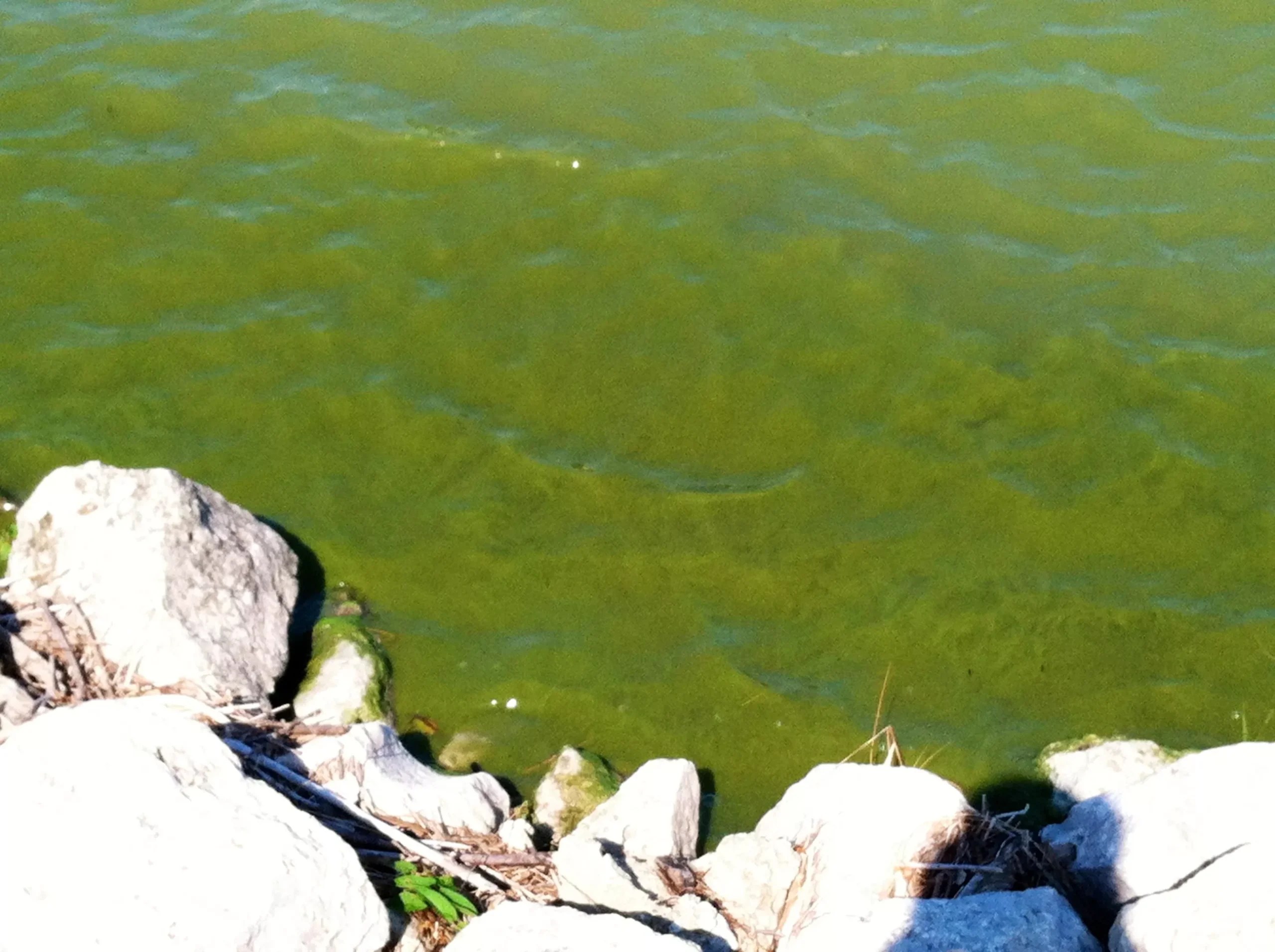
“Don’t defend the status quo that is poisoning our lake,” Lucas County commissioner Pete Gerken said earlier this week, referencing newly published maps that link certain “lower Maumee” farmland areas to increased levels of phosphorus (fertilizer) pollution. Lucas County and the city of Toledo have spent “hundreds of millions of dollars” to combat this hazardous runoff. This year’s algae bloom was the “third worst” on record; in 2014, the city of Toledo shut down its water supply for three days as the algae overtook its resources.

Without firm state guidance, researchers said at the 2017 Ohio Grain Farmers Symposium this week, the impetus remains on individual farmers to stay on stop of soil erosion and phosphorus runoff. The new maps show precisely where the source of the problem is — and where to double down on the environmental work against the algae bloom threat.
This article appears in Dec 20-26, 2017.

US taxpayers have spent over $2.5 billion on algae research at universities for the last 70 years.
Where is the algae bloom remediation?
Western Ohio also has large use of human waste as fertilizer. It is bragged that this fertilizer is an answer to our waste problem, it is free to the farmer and that it is high is phosphorous. So why isn’t this being stopped! This type of so called fertilizer is loaded with chemicals that are not eradicated from the product thru the waste water treatment plant. Please quit ignoring this. There are other ways to dispose of our waste but of course it will cost money!