

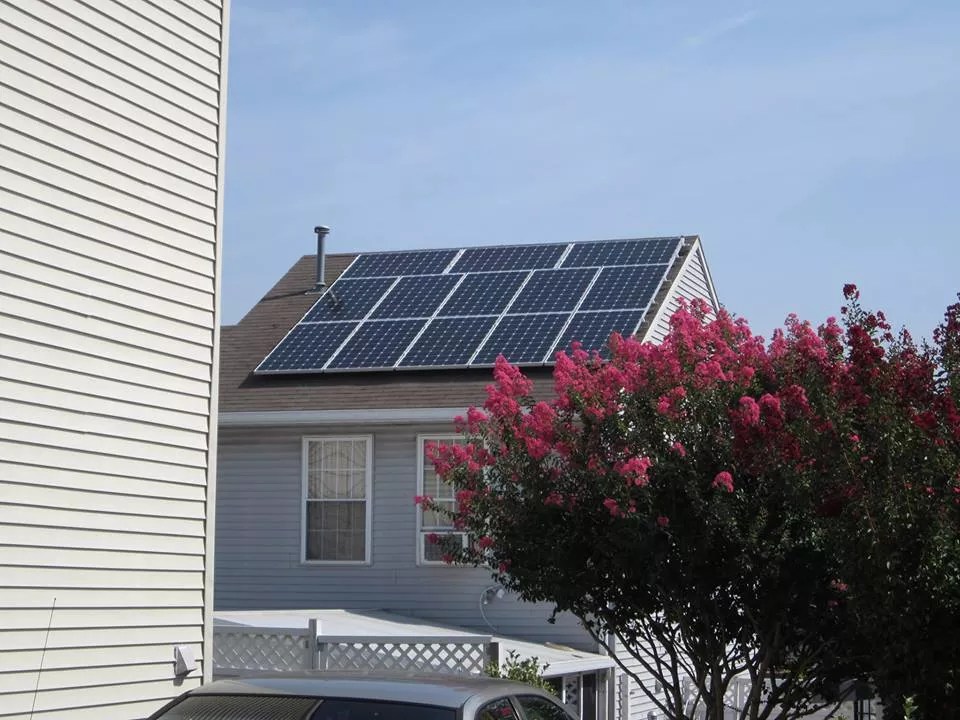
According to the group: “Volunteer co-op participants choose an installer on behalf of the entire group through an open and competitive bidding process. The selected installer provides co-op participants a personalized proposal for their consideration.”
Meetings will be held Nov. 14 (6:30 p.m. at Church of the Saviour in Cleveland Heights, 2537 Lee Road) and Nov. 15 (6:30 p.m. at Rocky River Memorial Hall, 21016 Hilliard Blvd.).

“We’re forming this co-op to help residents reduce greenhouse gas emissions and make saving money with solar energy as simple as possible,” Mike Foley, director of the county’s Department of Sustainability, said in a public statement. “Working with the group helps members learn about the technology so they feel confident in their decision to go solar.”
County leaders noted that: “Joining the co-op is not a commitment to purchase panels.” The group discount, if and when a bid is finalized, tends to be around 20 percent off the typical market value.
United Solar Neighbors has arranged this co-op format around the U.S., saving some $98,445 in the first round of installations and a total of 8,824,117.62 total lbs. of carbon offset, according to the group.
This article appears in Nov 8-14, 2017.

Hey, what would be really cool is if someone did some research and talked to people around town about the efficacy of solar panels in Greater Cleveland. We have tons of cloud cover in this region, and yet I see large corporations installing solar panels anyway. What kind of ROI do these companies and residents get, and how does that stack up against our normal electric bills when you figure total cost of ownership, which includes maintenance and replacement costs. I always hear people say solar would suck here, but those people are always laymen who don’t even use solar panels…I’d like to know if that assumption is true or false.
Solar Power Rocks breaks it down.
Basically, you’re right. A system in Ohio will produce 1050 kw/hrs per KW DC, which is about 4 panels, in California that would produce about 1,500 kw/h per KW DC.
Given that the amount of sun OH gets isn’t going to change anytime soon, the cost of power from utilities would have to increase about 15-20%, or the cost of solar would have to decrease 15-20% before it would be something that most homeowners would consider a good investment.
Companies are a little different as they can reduce the cost per KW of solar (benefit of a larger system) and they can depreciate the system. Also, for large companies with multiple sites, like Walmart, across states, some times installers blend the rate so every state still pencils out.