That legislation, House Bill 54, repealed the budget language of last year, which would have mandated a new I-71 interchange at Boston Road — one that would have required the demolishing of dozens of nearby homes, via eminent domain, and disrupting the normalcy of hundreds of others.
Thanks to the Ohio Senate Transportation Committee’s latest budget, H.B. 54 requires instead a feasibility plan that includes “solutions to mitigate and strategically manage any traffic concerns”—which doesn’t exactly mean an extension to the highway.
It now awaits the signature of Gov. Mike DeWine, who could approve it, veto it, or make line-item veto changes.
Such a traffic study would be spearheaded by the Ohio Department of Transportation and the Northeast Ohio Area Coordinating Agency, along with a third-party hired to survey the environmental impacts of all that pavement and concrete, how Brunswick and Strongsville could help pay for an interchange, and whether or not said interchange will actually cut down on congestion.
“Really, we’re studying to look at the best solution,” NOACA CEO Grace Gallucci told Scene in a phone call. “Not just from a cost perspective. But for the communities in that footprint.”
“I mean, they’re good people,” she added. Our “objective is to avoid any kind of eminent domain.”
It was eminent domain, or the state taking ownership of private land in the arguable interest of the “public good,” that has long worried Brunswick and Strongsville homeowners in sight of I-71. Since at least 2021, many have stuck signs in their yards protesting the interchange, or taken to door-knocking and lobbying city council members to save their homes from destruction.
A fear that state representatives in support of the repealed part of legislation seem to get.
“I have been a strong advocate for replacing the project with a traffic study to eliminate the hardship it would have on local residents,” State Rep. Melanie Miller, whose District 67 engulfs the proposed interchange area, said in a statement. “I’m thrilled that this provision has been included in the bill.”
A spokesperson for ODOT declined to comment on the traffic study plan until DeWine officially signs the bill.
Last year, former District 17 State Rep. Tom Patton, now a state senator, added language to that year’s transportation budget bill that would have made the interchange all but a necessity at Boston Road.
Opposition from officials at Brunswick and Strongsville city halls matched residents’ general vitriol. Tens of millions of dollars would’ve had to be spent by local governments, along with widening Boston Road into six lanes to accommodate the change.
A call to Patton’s office was not returned on Thursday. In a Cleveland.com article, Patton deferred to Ohio GOP spokesperson John Fortney for comment on losing the bill language he was responsible for in the first place.
“The problem of traffic congestion at the off ramp along a major interstate in a highly populated area makes it critical that any future plans provide the best answer to alleviate the congestion,” Fortney told a reporter. “A thorough study of multiple options will help provide answers and further define the best path forward.”
And, as Gallucci told Scene, it’s completely possible Boston Road and the study area around it may go unaltered.
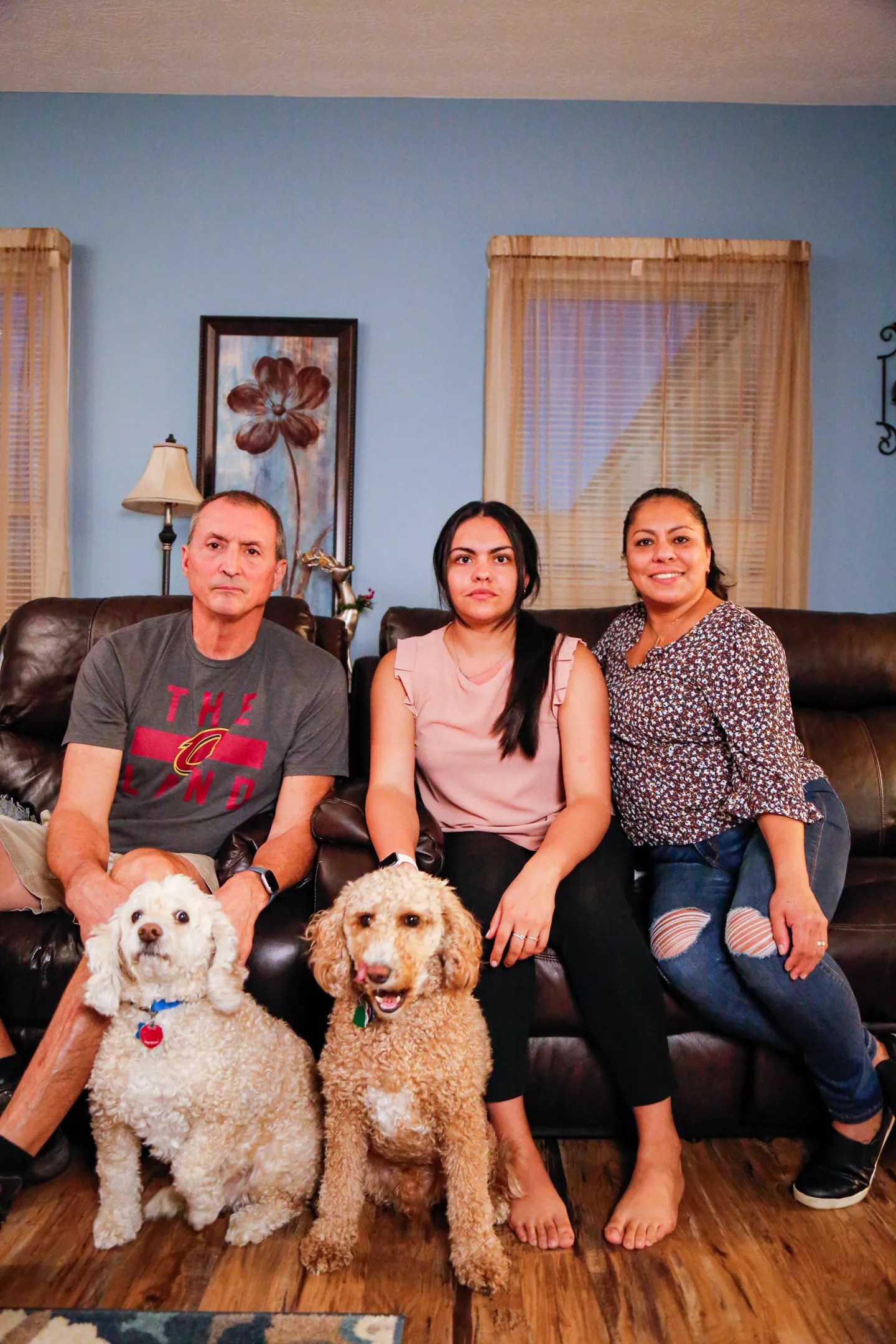
Which fits the hopes of Scott Claridge, who has lived for the past 20 years with his wife and daughter a stone’s throw away from what could be another on ramp in the next decade—if next year’s study decides on one, after all.
It’s why Claridge isn’t totally placated.
“This is just kicking the can down the road,” he told Scene on Thursday. “To say that it was repealed doesn’t mean it’s the end of this, that it’s not going to happen.”
And he’s right: NOACA and ODOT could very well suggest to the state a need for, come next June, an official interchange feasibility study.
Regardless, Claridge is opting to revel in the house he’s invested in, and raised a family in, for the past two decades. Just last week, after years of back and forth, he finished a $9,000 remodel of his kitchen.
“It may happen in six months, it may happen in six years,” he said. “But I’m going to enjoy living here for the time being.”
Related

Their Home Would Be Taken by Eminent Domain for Proposed I-71 Interchange. The Family’s Been Here Before
Subscribe to Cleveland Scene newsletters.
Follow us: Apple News | Google News | NewsBreak | Reddit | Instagram | Facebook | Twitter | Or sign up for our RSS Feed
Related Stories

Ohio Senate Committee Hears Testimony Against Controversial I-71 Brunswick Interchange Proposal

New State Legislation Could Halt Controversial I-71 Interchange in Brunswick
Their Home Would Be Taken by Eminent Domain for Proposed I-71 Interchange. The Family’s Been Here Before
This article appears in Mar 13-26, 2025.