In 10 days, on January 20, former President Donald Trump will approach the steps of the U.S. Capitol and be sworn in for a second term as the country’s 47th commander-in-chief, ending months of bipartisan head-scratching over how a policy book promising to tilt the country conservative will play out on the national stage.
And here in Cuyahoga County.
Four years of a Biden-Harris administration, in spite of and due to a global pandemic, led to a large trickle-down of funds intended to keep cities and counties afloat while buffing up outdated infrastructure.
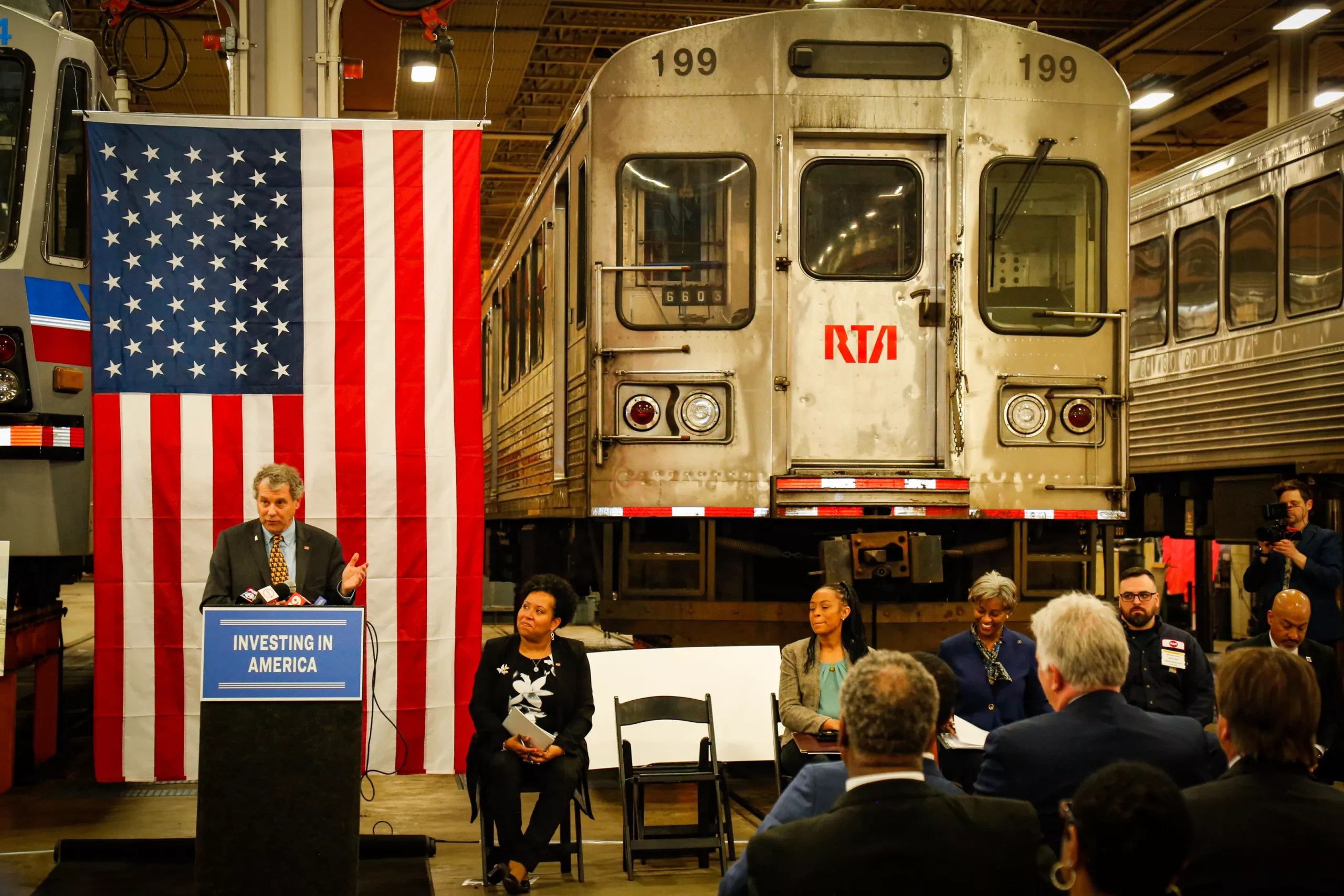
Here, too. The West Side Market got $10 million from the American Rescue Plan Act, Signal reported. Cuyahoga County’s lakefront got a combined $7 million. And $130 million helped purchase the first line of 36 new RTA rail cars since the current ones were built in the 1970s and 1980s.
And just on Friday, the U.S. Department of Transportation gave Cleveland $70 million to help build its $284 million North Coast Master Plan—the elusive lakefront construction north of Huntington Bank Field set to begin work in 2027.
Which begs the question for a county building up its bridges, parks and lakeside: Will the same level of funding still be coming from Washington, D.C. in the next four years?
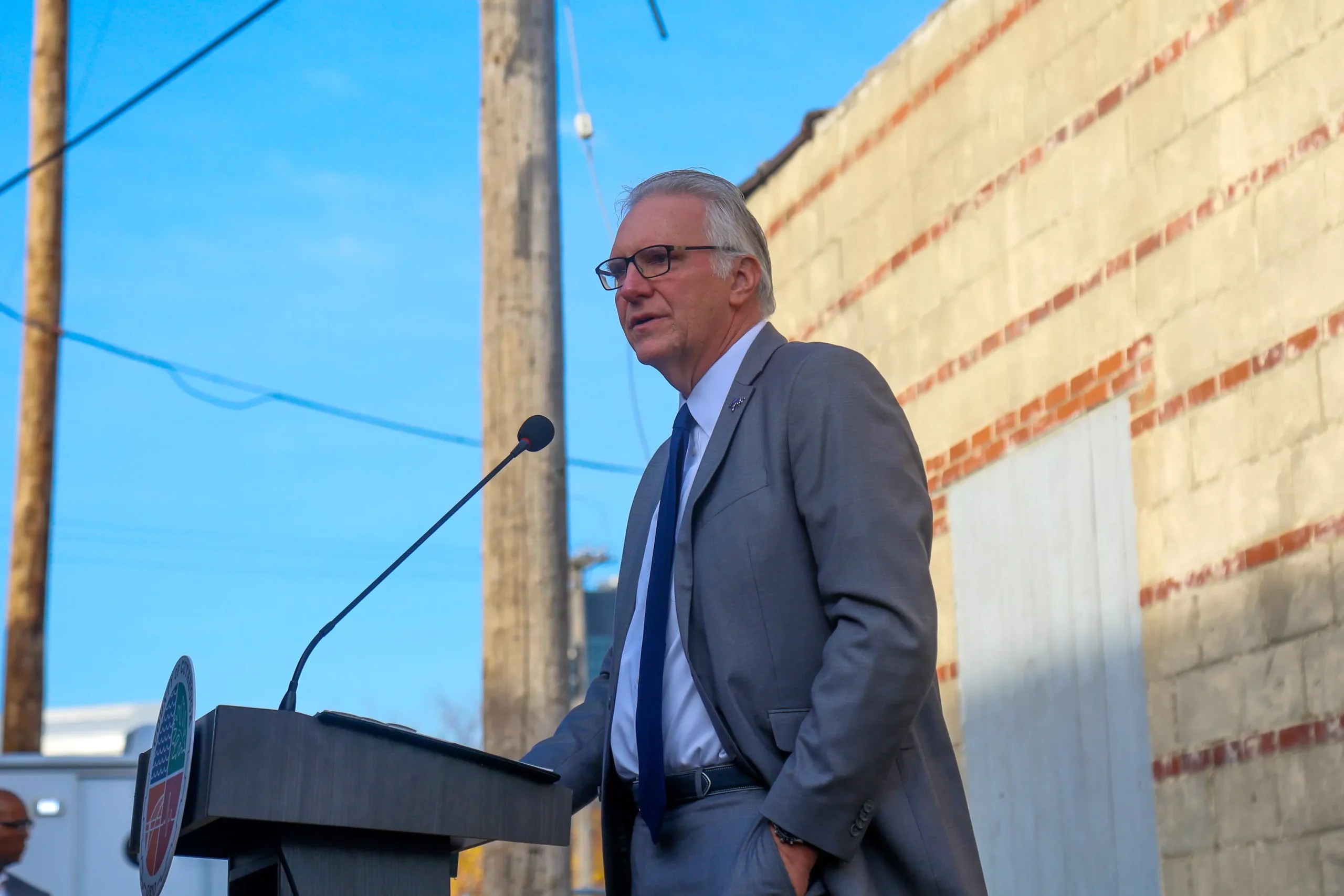
“You know, I don’t have a crystal ball,” County Executive Chris Ronayne said on Thursday, sitting in a meeting room on the eighth floor of the county building. “So I’m not going to say what’s going to happen. But I will say that we will keep up the energy on turning any stone we can.”
Ronayne is currently mid-term and seeking re-election come 2026. Up until January, his office so far has been marked with a smiling adoration—to use a Ronayne buzzword—of “public-private partnerships” and a squeaky-cleanness juxtaposed with corruption allegations thrown on his predecessor, Armond Budish.
On January 3, County Council President Pernell Jones stepped down from his post, allowing veteran councilmember Dale Miller to assume his seat. Philosophically similar to Ronayne (the two served on County Council together in the 2010s) the men admitted separately they believe county leadership may have to put extra oomph into their jobs to scrape up dollars for their to-do lists in lieu of relying on Washington.
Plans featuring big ticket items long-overdue on each man’s political agenda: like raising at least $750 million for the new County Jail in Garfield Heights, set to break ground this year. Or the replacement for the downtown courthouse. Or building the Low Line. Or constructing new trails.
Planning philosophies the two may come to butt heads about.
“I think we might have to do some real hard thinking,” Miller told Scene in a call, “as to how [building up the lakefront] is going to change people’s behaviors, you know?”
“We just need to take a close look at what’s been done in other cities,” Miller added, “and come up with a plan that we have confidence in, that it’s really gonna work. And one that’s cost-effective.”
Miller, who lives in West Park with his wife of 37 years and represents District 2, said a good bulk of his concern is the county’s $25 million deficit in this year’s budget. Though that’s just four percent, that could entail County Council forgoing a backing of certain infrastructure builds while working to keep itself financially upright.
But otherwise Miller seems relatively in harmony with Ronayne. For bolstering the $1.2 million Downtown Safety Patrol; for bettering the County’s response to mental health woes; for attracting more immigrant workers despite a federal administration that’s weary of them; for building a County Jail that revolves around remediation rather than punishment. (And moving away from its disgraced meal provider, Trinity.)
“That’s what I focus on,” Miller said. “It’s those corn-bread-and-butter issues that affect the quality of life in Cuyahoga County.”
Ronayne’s outlook for at least the remainder of his term carries a kind of faith in the momentum of its first half.
“I’m glad to have gotten in the door two years ago to get some major things started,” Ronayne said, “whether it’s going to bring green energy, whether it’s a Welcome Center, whether it’s a Women’s Health Commission. Because no matter what, those things are up and running, and we are going to see those things continue to flourish.”
As for working with Republican Senator Bernie Moreno in convincing U.S. Congress to send down grant money for growth, Ronayne isn’t 100 percent certain.
“Let’s have this conversation again in six months,” he said. “We’ll know more then.”
Related

Cuyahoga County Exec Recommends New Meal Provider for Jail
Subscribe to Cleveland Scene newsletters.
Follow us: Google News | NewsBreak | Reddit | Instagram | Facebook | Twitter
Related Stories
Cuyahoga County Exec Recommends New Meal Provider for Jail

County Jail Architects Make Case for Low-Rise, Four-Story Campus Design in Garfield Heights
This article appears in Jan 1-15, 2025.