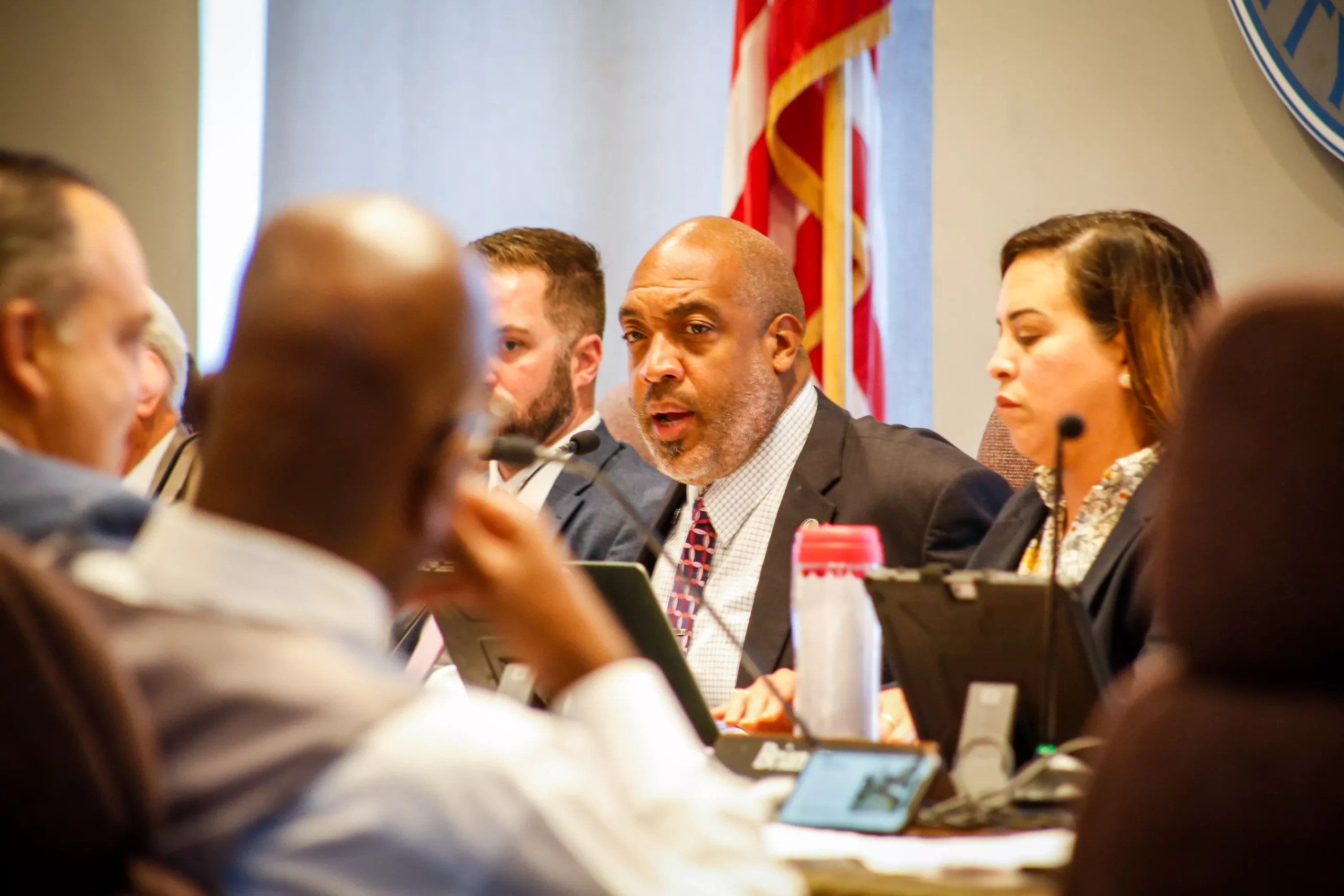
For nine hours Wednesday, all 17 members of Council did their best to speed through 37 pieces of legislation, a packed house of discussion in chambers that saw occasional bouts of legislative doubt and frustration.
Besides the street renamings or greenlights for gun-sweep grants, most of the special meeting revolved around scrutinizing, and eventually approving, dollars for stadium repairs, for “necessary” tax incentives for new hotels or apartment complexes, and approval for 15-minute city legislation.
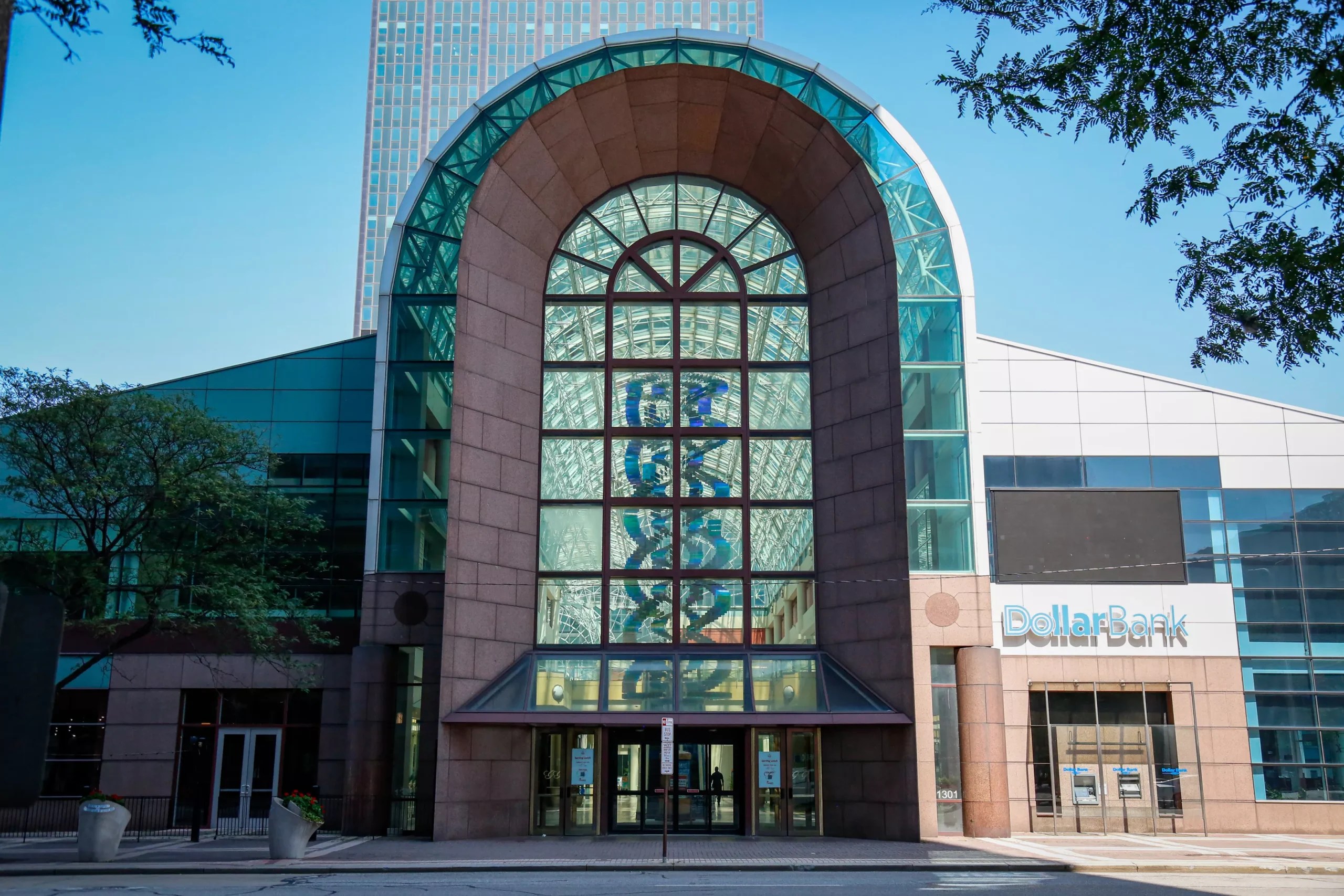
Part of those funding approvals came in the form of tax-increment financing, where governments help bankroll large infrastructure projects, for two major Downtown projects: The Apollo apartments in the Flats West Bank and the renovation of the half-empty Erieview Tower at the Galleria into a Marriott-branded W Hotel.
In the case of The Apollo, a 70-unit rehab of a blighted warehouse neighboring the Cleveland Aquarium, some $347,590 were being sought in a 30-year TIF. In exchange for approval, developers promised $10,000 of new annual tax revenue, eight new jobs, and affordable rents sourcing 60 percent of the one’s annual median income.
“It’s been an eyesore for years—it’s terrible,” Ward 8 Councilman Michael Polensek said about the building. “I wondered for years if anyone was going to do something with the building.”
The same mentality was focused on Erieview, which has sat “about 60 percent vacant” since 2019. Marriott has been interested in the tower’s luxury potential—the city’s development team highlighted their intrigue in a rooftop restaurant—but ran into funding obstacles earlier this year.


Jon Pinney, a partner at Kohrman Jackson & Krantz, a legal firm assisting Erieview’s funding ask, insisted that Council’s approval for the tax incentives is needed as a failsafe measure for the Kassouf family, the current owners of Erieview.
“[Their] primary concern is the risk,” Penney said. “[James Kossouf] does not want to take on risks that would bankrupt his family. His commitment to the city is there. But he’s hoping to de-risk his transaction.”
The massive tax incentive ask—totaling some 18 percent of funding—seemed to rile some councilmembers, who thought the lean on the city might be a little too much. Some, like Council President Blaine Griffin, philosophized as to whether or not Downtown needed a luxury hotel in the first place.
Griffin’s commentary echoed the Galleria’s own downfall in the 1990s, when traffic shifted to Tower City, and, in just two decades, left the block north East 9th and Superior basically empty.
“I don’t want to get into a position where we get into an over-investment of hotels,” he said. He added, “I mean, Downtown goes through this cycle of: one part builds up, and the other just kind of falls behind.”
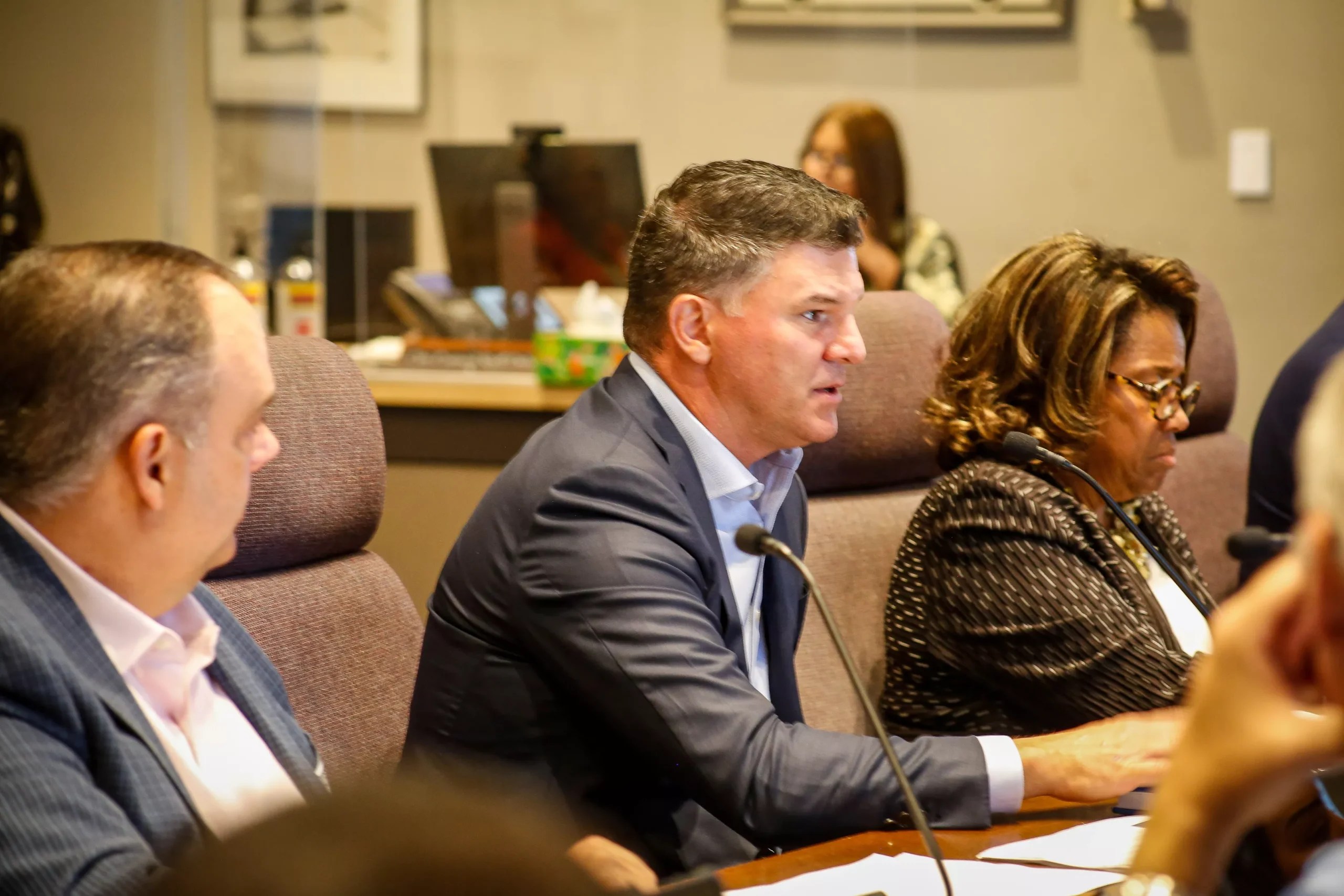
Ward 13 Councilman Kris Harsh wasn’t as lenient. Though Harsh seemed to rally around the W’s potential in a disappearing office park, he expressed concern that $39 million in tax equity could attract other developers seeking, one could say, easy city money. (The last one, Council agreed, was in 2003.)
“I hear from the folks in my ward all the time, ‘We have to pay all of our taxes, yet these companies worth millions of dollars? You just give it to them!'” Harsh said, somewhat agitated. “And I don’t want a dead Galleria. But I’m concerned that opening up the Downtown abatement can of worms means it won’t get put to bed.”
In a more theoretical addition, members of City Planning petitioned Council for the approval of a transportation demand management ordinance, one that would bolster greatly, they argued, the Bibb administration’s pursuit of a 15-minute city.
City Planner Matt Moss and Director Joyce Pan Huang urged Council that the TDM “menu” of non-car-related incentives for developers would lead to creating more climate-friendly, more-walkable places to live along transit lines.
Their pitch included a finalized form of the so-called menu, which Moss and team had been working on since late last year. In it, developers choose from weighted build options—a bike locker, free RTA passes, centralized green space—that would, Moss argued, create more beautiful spaces for city dwellers.
“Right now, hardscape in between a building is a regularity requirement,” Moss said, referring to parking minimum culture that typically leads to car-filled lots. “This space could be used for trees, as a green space, which developers tell us they want to do, but they can’t because of the city’s regulations.”
Council would approve Moss and Huang’s pitch, effectively greenlighting the start of Planning’s three-pronged mission to improve Cleveland with non-suburbanized development.
Yet, not all were easily in line with Moss, who’s known to bike to work at City Hall.
“Matt, I don’t want to call you out, but you might be the only one at this table who doesn’t get to work in a car,” Ward 15 Councilwoman Jenny Spencer said. She hinted at the status quo: “Many of my residents have been struggling with this one,” Spencer said. “I mean, economic freedom requires you to have a single occupancy vehicle.”
City Planning’s “menu” ordinance will go into full effect in February 2024, so, Moss said, that his department can “fully flesh out” the point system. “We want to make it as objective as possible,” he said.
Subscribe to Cleveland Scene newsletters.
Follow us: Apple News | Google News | NewsBreak | Reddit | Instagram | Facebook | Twitter | Or sign up for our RSS Feed
Related Stories

Without Local Historic Landmark Status, Outlook of Cleveland’s Greyhound Station Could Be Grim

Study Says Downtown Cleveland Among Slowest Recovering in Country in Covid Aftermath, But DCA Disputes Data

Ohio City Inc.’s Tom McNair to Head City’s Department of Economic Development
This article appears in Aug 9-22, 2023.