

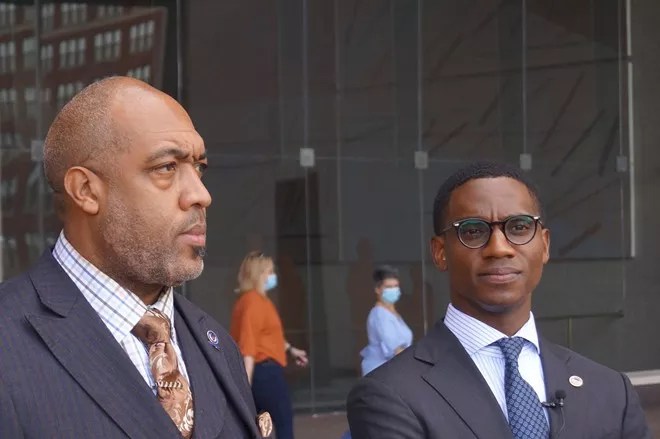
Council members, in a press conference before the vote Monday evening, during which the legislation is expected to pass, championed the effort.
“Medical debt is like a monkey on your back. It never goes away, you think about it constantly, it interferes with your credit score when you try to buy that house or get a car,” said Kris Harsh. “Your medical debt can be a detractor keeping you from making those next steps in your life.”
The legislation would have the city partner with RIP Medical Debt, a national nonprofit which has eliminated nearly $9 billion in medical debt for roughly 5.5 million families. To accomplish this, RIP Medical Debt buys millions of dollars in debt that has reached “bad debt status,” meaning the debt has gone unpaid long enough that the owner of the debt, in this case the hospital, sells it off to a debt buyer or transfers it to a collection agency.
“We can take a dollar of resources–coming from government or private, philanthropic donors– and translate that into medical debt relief of $100 for various individuals and it’s all focused on those who are lower income or medically debt burdened,” said RIP Medical Debt special advisor Keith Hearle.
Using $1.9 million in rescue recovery funds the city set aside from the American Rescue Plan Act, RIP Medical Debt will buy the debt of city residents who make four times less than the poverty level or who dedicate 5% or more of their income to paying off medical debt.
Although only residents in the city of Cleveland will be eligible to have their debt bought and canceled by the $1.9 million in recovery funds, because hospitals may also share debt portfolios from those outside city limits, RIP Medical Debt may still cancel debts of others.
Crucially, council members noted, individuals won’t be able to enroll in the program, instead Cleveland hospitals have to partner with RIP Medical Debt, who will work with them to buy debt already on the secondary market.
Supporters say alleviating medical debt will have a major impact for marginalized communities and is in line with the council’s declaration of racism as a public health crisis
“The data that are out there very clearly show that those who hold medical debt, especially large medical debts, are on average lower income and people of color,” said council member Charles Slife.
The bill passed in the council’s Finance, Diversity, Equity and Inclusion Committee and will face a vote in Monday’s general council meeting.
“We know that there are thousands of residents within the city who have avoided seeking medical treatment because they’re concerned about prior bills, they’re worried about future bills and, frankly, our healthcare system is so unjust that they feel that they don’t have the financial ability to access the healthcare that makes them healthy. We hope that the work today is a small part of ending this,” said council member Rebecca Maurer.
Coming soon: Cleveland Scene Daily newsletter. We’ll send you a handful of interesting Cleveland stories every morning. Subscribe now to not miss a thing.
Follow us: Google News | NewsBreak | Instagram | Facebook | Twitter
This article appears in Apr 19 – May 3, 2023.