

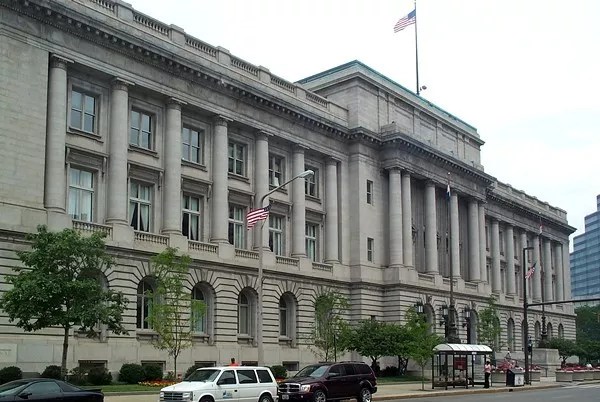
The city of Cleveland has filed a federal lawsuit against several drug manufacturers and pharmacy benefit managers (PBMs) over insulin prices, alleging a pricing scheme that caused an exorbitant rise in insulin prices and cost the city millions in prescription benefit payouts. The city is represented by the Cleveland Law Department as well as several private firms.
“This action alleges that Defendants violated the Racketeer Influenced and Corrupt Organizations Act and Ohio statutory and common law by engaging in the Insulin Pricing Scheme,” says the suit. “The Insulin Pricing Scheme directly and foreseeably harmed, and continues to harm [the city of Cleveland].”
The first city in the U.S. to file a lawsuit of this kind, Cleveland is seeking damages to recover benefit payouts, injunctive relief, restitution, disgorgement, attorneys’ fees and costs, and “all other available relief” for what it calls “the Insulin Pricing Scheme.”
Several high-profile companies including Eli Lilly and Company, Novo Nordisk Inc, Sanofi-Aventis U.S. LLC, Evernorth Health Inc, Express Scripts Inc, Medco Health Solutions, ESI Mail Pharmacy Services Inc, CVS Pharmacy Inc, Caremark LLC, UnitedHealth Group and Optum Inc are named as defendants in the lawsuit, which is more than 150 pages long.
“Production costs have decreased in recent years,” the suit alleges. “A September 2018 study in BMJ Global Health calculated that, based on production costs, a reasonable and profitable price for a year’s supply of human insulin is between $48 and $71 per person (and between $78 and $133 for analog insulins). Another recent study found that the manufacturers could be profitable charging as little as $2 per vial.”
More than 37 million Americans have diabetes—11 percent of the population, according to the Centers for Disease Control. Without the ability to produce sufficient insulin naturally, some diabetics rely on prescriptions to stay alive.
After Canadian scientists pioneered insulin production in 1922, they sold the patents to the University of Toronto for just $1 each. The university then licensed insulin manufacturing to Eli Lilly and Novo Nordisk—both of which are named in the suit. Under this arrangement, companies can patent changes made to prescription insulin and extend patents.
“We’re not even talking about rising prices for better products here,” said Yale researcher Dr. Kasia Lipska in the Journal of the American Medical Association, who is quoted in the suit. “I want to make it clear that we’re talking about rising prices for the same product… It’s the same insulin that’s just gone up in price and now costs ten times more.”
The lawsuit also names PBMs, which are at the center of the pharmaceutical payments between drug manufacturers, pharmacies and payors. Unlike a wholesale system, PBMs negotiate with manufacturers, contract with pharmacies and manage payor drug benefits.
“For the majority of these transactions, only the PBMs are privy to the amount that any other entity in this supply chain is paying or receiving for the same drugs. This lack of transparency affords Defendants the opportunity to extract billions of dollars from this payment and supply chain without detection,” says the suit.
“In every interaction that the PBMs have within the pharmaceutical pricing chain, they stand to profit from the prices generated by the Insulin Pricing Scheme.”
Subscribe to Cleveland Scene newsletters.
Follow us: Google News | NewsBreak | Reddit | Instagram | Facebook | Twitter
Related Stories

New Cleveland Consent Decree Monitor Tells Council Trust Between Community and Police Will Enhance Public Safety

Cleveland Sues “Negligent” Out-of-State Landlords, Property Managers of Embattled Shaker Square Apartments
This article appears in Jul 26 – Aug 8, 2023.