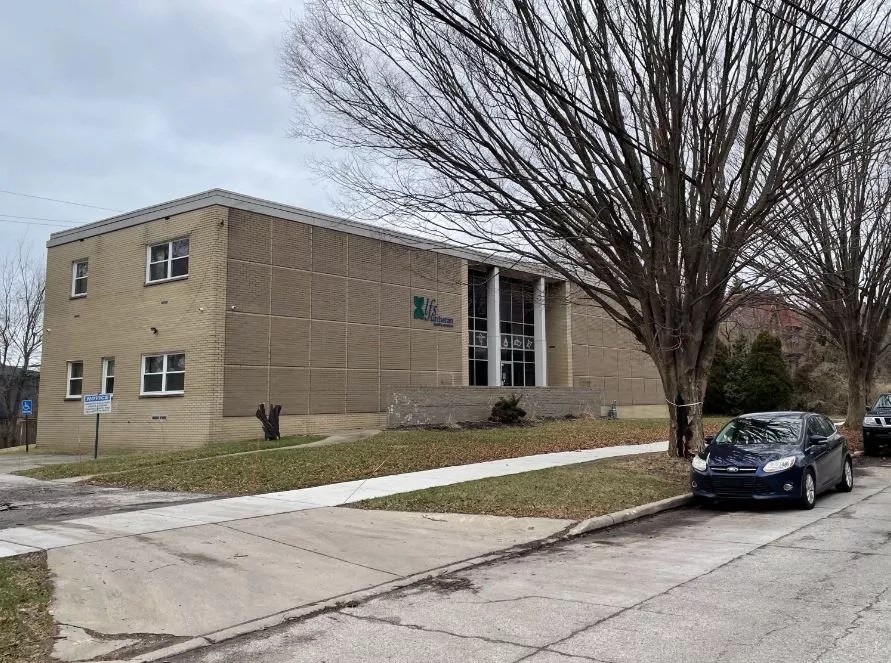
Despite efforts by some Ohio City residents to frame the Lutheran Metropolitan Ministry’s proposed youth drop-in center as a threat to the neighborhood that would bring crime and diminish the character of the community, the Cleveland Board of Zoning Appeals voted to move the project forward during a jam-packed and lengthy hearing on Monday.
At the meeting, which hosted roughly a dozen neighbors along with attorneys and local stakeholders, concerns from some who claim the center could be a harbinger of crime and nuisances clashed with those praising its potential for solving a city deficit in helping the homeless.
The board voted to conditionally approve LMM’s years-long makeover plans of 4100 Franklin as long as the ministry provides a detailed security plan in a follow-up session scheduled for February 13th.
A plan, it seems, that could counter some residential fears that the youth aged 18 to 24, who will be using the facility to wash clothes, catch some daily rest, charge their phones, take a shower or get access to resources, could spell problems for surrounding neighbors. LMM and their lawyers have repeatedly denied those fears are based in reality.
“There’s assumptions that [the youth] are going to make trash, they’re going to make noise,” Benjamin Ockner, an attorney for LMM, said at the hearing. “But there is no evidence for that.”
He added, “It’s not our desire to adversely impact anyone.”
Used as office space for the past 14 years, the somewhat nondescript, two-story beige structure off Franklin has been the chosen center of LMM after the agency and several partners engaged in a location search in 2022. The aim, according to a fact sheet, is for LMM and its housing partner, A Place 4 Me, to fill a need for a growing demographic that existing men’s and women’s shelters can’t provide.
“Many young people disengage from the system entirely because they feel unsafe, unwelcome, and disrespected in a system not designed for them,” the fact sheet reads. “Young people need services, not shelter referrals.”
But regardless of LMM’s goodwill in erecting such a center, neighbors—most of them close to the site’s perimeter—have gathered out of hesitation, referencing youth homelessness crime stats or a survey of a nearby block club, in which signatories oppose the remodeling.
“[We] are the most directly affected by this, the ones on the block, by the increase in noise and traffic and potential crime and garbage,” said Ron O’Leary, an Ohio City resident and former housing judge who lives close to 4100 Franklin, said at Monday’s meeting.
O’Leary said that the block club he’s a part of, stretching from 38th to 48th Street, is opposed to the conversion: “We think this is a good program, a needed usage for this,” he said. “But it’s not the right location.”
Dolores Garci, a mother of seven who’s lived one house down for the past decade, said she’s both skeptical of LMM’s underlying aim for the drop-in conversion site and the ministry’s ability to keep surrounding homes safe.
LMM, before Monday’s hearing, had detailed initial descriptions of its security proposal, Ideastream reported, from newly installed cameras to bolstering fencing and better lighting, along with its planned hire of a “trauma-informed” security guard.
The ramped-up security is a response to a study cited by some residents in Monday’s meeting, suggesting that 75 percent of youth drop-ins are drug user, and more than 33 percent of them are involved in prostitution. (Unclear was any suggestion people were using drugs or engaging in sex work on the premises.)

Other slides depicted residents around other drop-ins describing them as a haven for “unruly kids” and a “safe house for thieves and crooks.”
Neighbors who were accused of stereotyping homeless or unhoused youth in a neighborhood festooned with “In This House We Believe…” signs attempted to defend themselves.
“You’re criticizing us for ‘making presumptions,'” Garci said, “but we’ve not been able to hear from LMM to provide data precedenting the radicalized use of this street… I don’t think they’ve taken any steps to address the security concerns of residents surrounding the property.”
In January, as renderings by Bialowsky met the local design committee’s approval, the Franklin Clinton Block Club, in an effort to tap the community’s sensibilities, surveyed 186 residents—86 of them in about a half-mile radius—the majority of which supposedly welcomed LMM’s drop-in conversion.
This, explained resident Marge Misak, who’s spent 32 years in Ohio City, was coupled with three listening sessions, a package of written materials and a 54-person dinner, where chatter about parking issues intertwined with the YMCA’s Y Haven, a comparable youth-service center.
“They come to this with a pretty good understanding of what will be there with the drop-in center,” Misak said, referring to the club. “And they’ve said, ‘Yes, we want this in our neighborhood.'”
The Board of Zoning Appeals will likely approve LMM’s revised security plan. But that’s not likely to be the end of the story, as the issue might end up in court.
“This is representative of the dialogue we’ve had,” Garcia previously said. “It’s a demand for support, like it or not, 100%. And if you don’t support it, you’re a bad person. … We will continue to oppose the plan as it currently stands, and we’re willing to litigate that.”
Follow us: Google News | NewsBreak | Instagram | Facebook | Twitter
Related Stories

In Mix of Levity and Urgency, NOACA Entertains Clevelanders’ Climate Worries

As City Braces for Freezing Temps, Advocates Host Vigil for Homeless Clevelanders Who Died This Year

Ohio City Neighbors Appeal BZA Decision to Approve Homeless Youth Drop-In Center
This article appears in Jan 25 – Feb 7, 2023.