


Hepatitis A is a vaccine-preventable liver disease that usually spreads when a person ingests fecal matter, even in microscopic amounts, from contact with objects, food or drinks contaminated by the stool of an infected person. Hepatitis A can also be spread from close personal contact with an infected person, traditionally through sexual activity.
(So, be careful when you’re feeling frisky enough to eat the booty like groceries.)
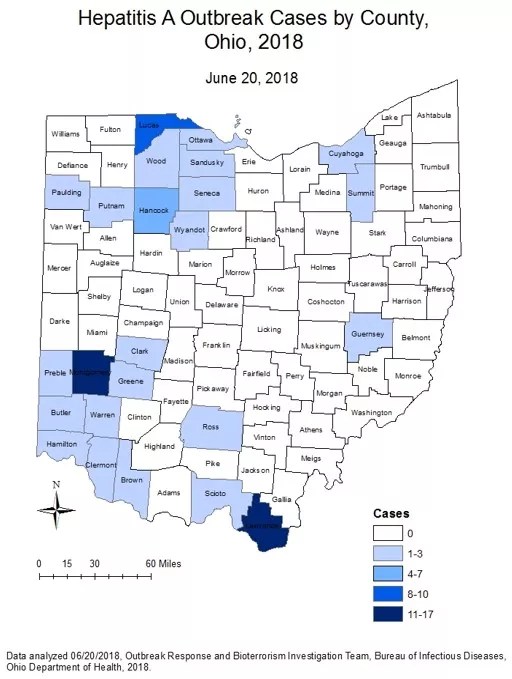
According to the health department, the increase in cases are linked to risk factors outside of anal play, like illegal street drug use (injected or not), homelessness, people who have traveled to other areas of the U.S. currently experiencing outbreaks and people who have been incarcerated – or people who have had contact with known cases. Luckily, there haven’t been any deaths associated with this year’s outbreak, but the statistics are as follows:
- Number of cases: 79
- Illness onset range: 01/05/2018 – 06/18/2018
- Age range: 19-64 years
- Gender: 68 percent male
- Number of hospitalizations: 58 (73 percent)
- Number of deaths: 0
- Number of counties with cases: 24 (27 percent)
Symptoms include sudden nausea, vomiting, abdominal pain, especially on the upper right side below the lower ribs; clay-colored bowel movements, dark urine, no appetite, low fever, joint pain, jaundice (yellowing of the skin and whites of the eyes); and itching. People who are high-risk for contracting Hepatitis A should contact their doctor or local health department for a vaccine to prevent infection.
This article appears in Jun 20-26, 2018.