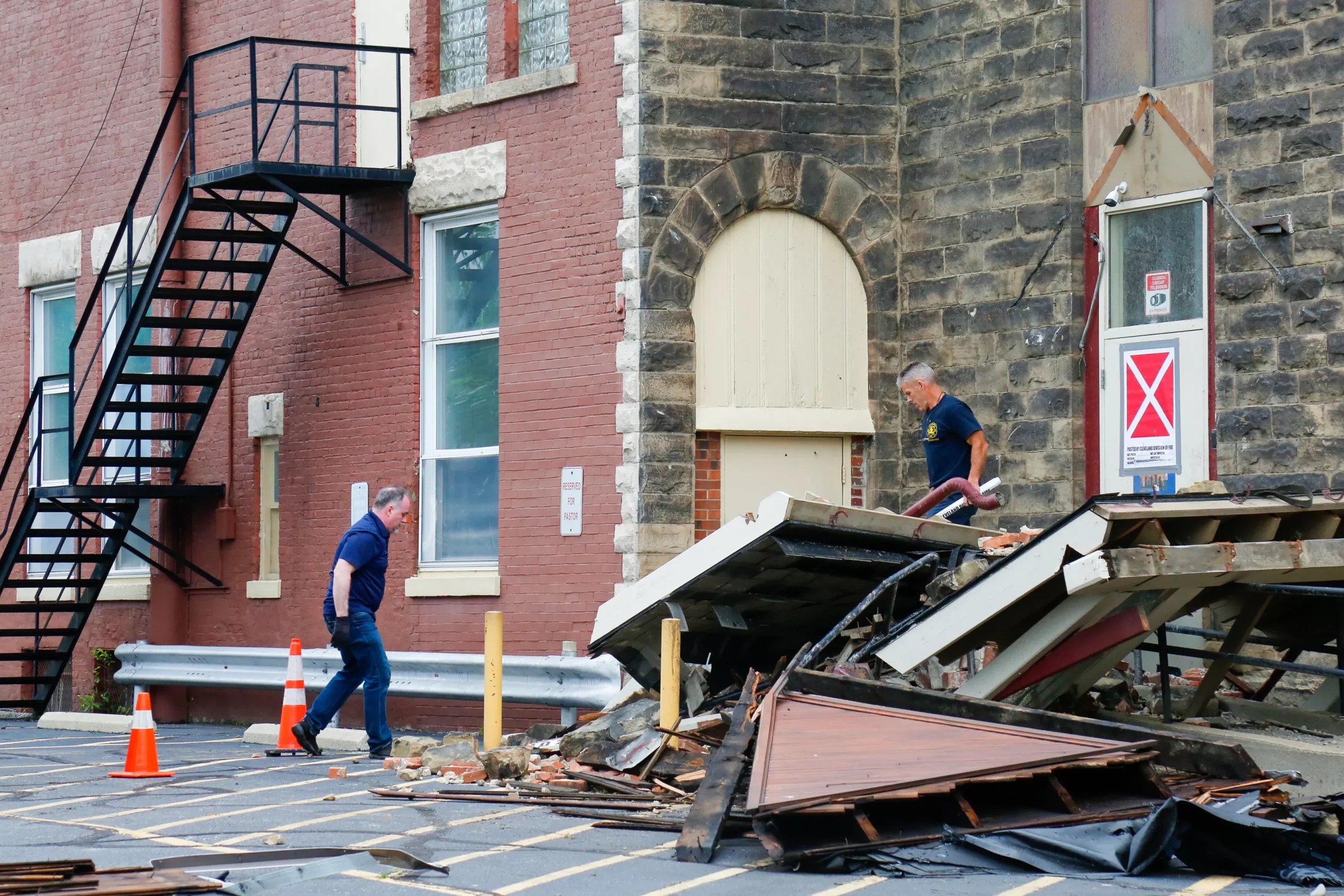
The twister, a category EF-1, spent three minutes around midnight Thursday in the Hough neighborhood, the National Weather Service confirmed.
Clocking wind speeds up to 110 miles per hour, and trailing about a mile down Euclid Avenue, the surrounding storm—the second in just 24 hours—proved a major headache for the majority of the region. As of Friday at 5:32 p.m., 42,589 county residents were without power, 10,143 of those in Cleveland, according to FirstEnergy’s Outage Map.

Michael Dever, Cuyahoga County’s director of Public Works, said that 38 of the 59 communities of Cuyahoga County were still facing power outages. By Friday afternoon, 250 residents had called the Department of Public Works for assitance resolving sewage overflows, with 170 asking for city help in de-flooding their basements.
“We had a significant amount of calls,” Dever told Scene, suggesting Wednesday and Thursday’s storms qualified for the books. “This was a 25- to 100-year storm based on the amount of rain that fell.”
Following an hour or so of high winds and sideways rain, the storm left its mark in specific pockets of the city and county. In Warrensville, Lake Erie Golf Carts had roughly 100 feet of its front-facing wall ripped away. Drivers and rescue workers were seen canoeing on pools of rainwater clouding I-90, with cars trunk-up in floating in between.
Related

National Weather Service Confirms Thursday Night Tornado East of Downtown Cleveland
“Oh man, there were papers all strewn about,” Curtis Wilson, a security guard for Clerk’s Office, told Scene from the third-floor City Clerk’s Office. “We had to come in at six in the morning and start cleaning up glass. Everything had to be resorted.”

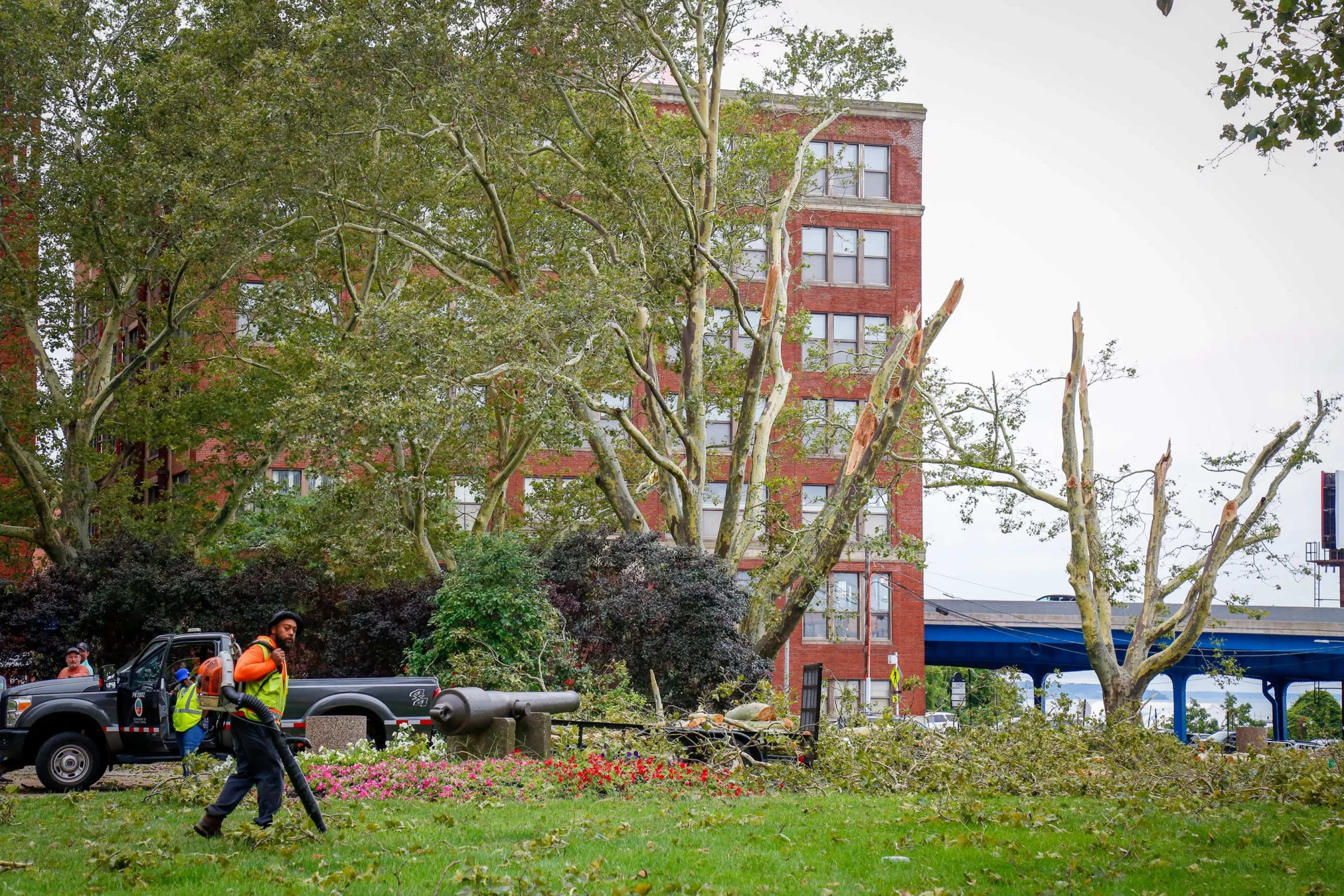
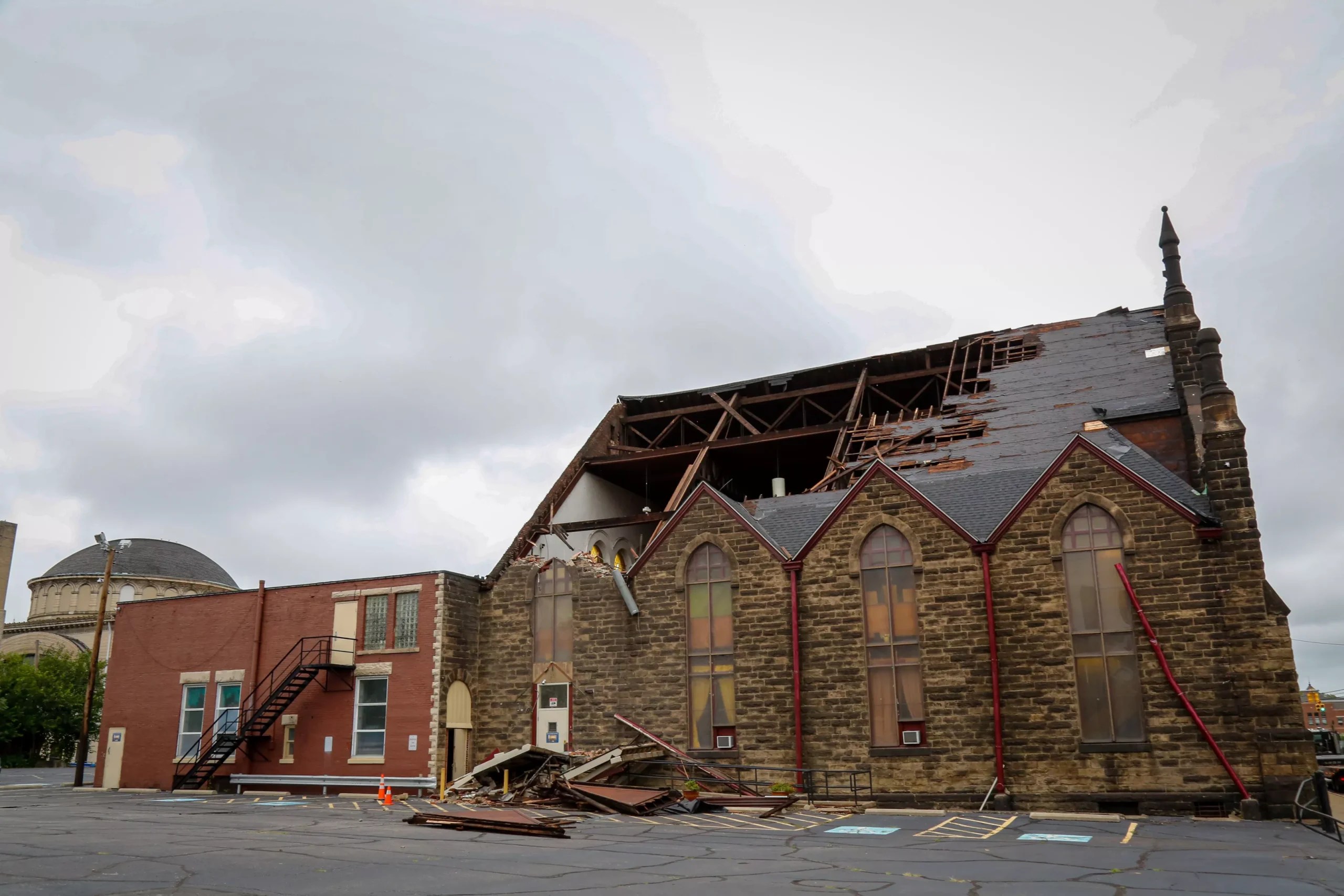
Michael Harris, 71, who lives in the Church Square apartment complex a few blocks west, has been without power since late Thursday night, and expects to be in the dark, his power company told him, until Sunday.
“It was 10 o’clock, and I heard this rumbling,” he recalled. “I knew it was a tornado. It was banging, banging. And then when I walked out this whole street here was covered with debris.”
John, 73, who takes the Healthline to Calvary for their monthly meals, was equally wowed.
“I mean, it definitely had to be 100 miles an hour,” he said, looking up as roofers began cleanup, “to tear that thing off, right there.”
According to Brandy Carney, the county’s director of public safety, Thursday’s string of storms wasn’t devastating enough to lead the county to draw on the state’s $7 million emergency clean-up funds. The EF-1 wasn’t like, she said, the 2019 microburst that shook the Heights, or Hurricane Sandy in 2012 before that.
Subscribe to Cleveland Scene newsletters.
Follow us: Apple News | Google News | NewsBreak | Reddit | Instagram | Facebook | Twitter | Or sign up for our RSS Feed
Related Stories
National Weather Service Confirms Thursday Night Tornado East of Downtown Cleveland

New Life at Calvary Church, Scarred by Last Week’s Tornado, Seeks Help with $4M Repair Costs
This article appears in Aug 23 – Sep 5, 2023.