

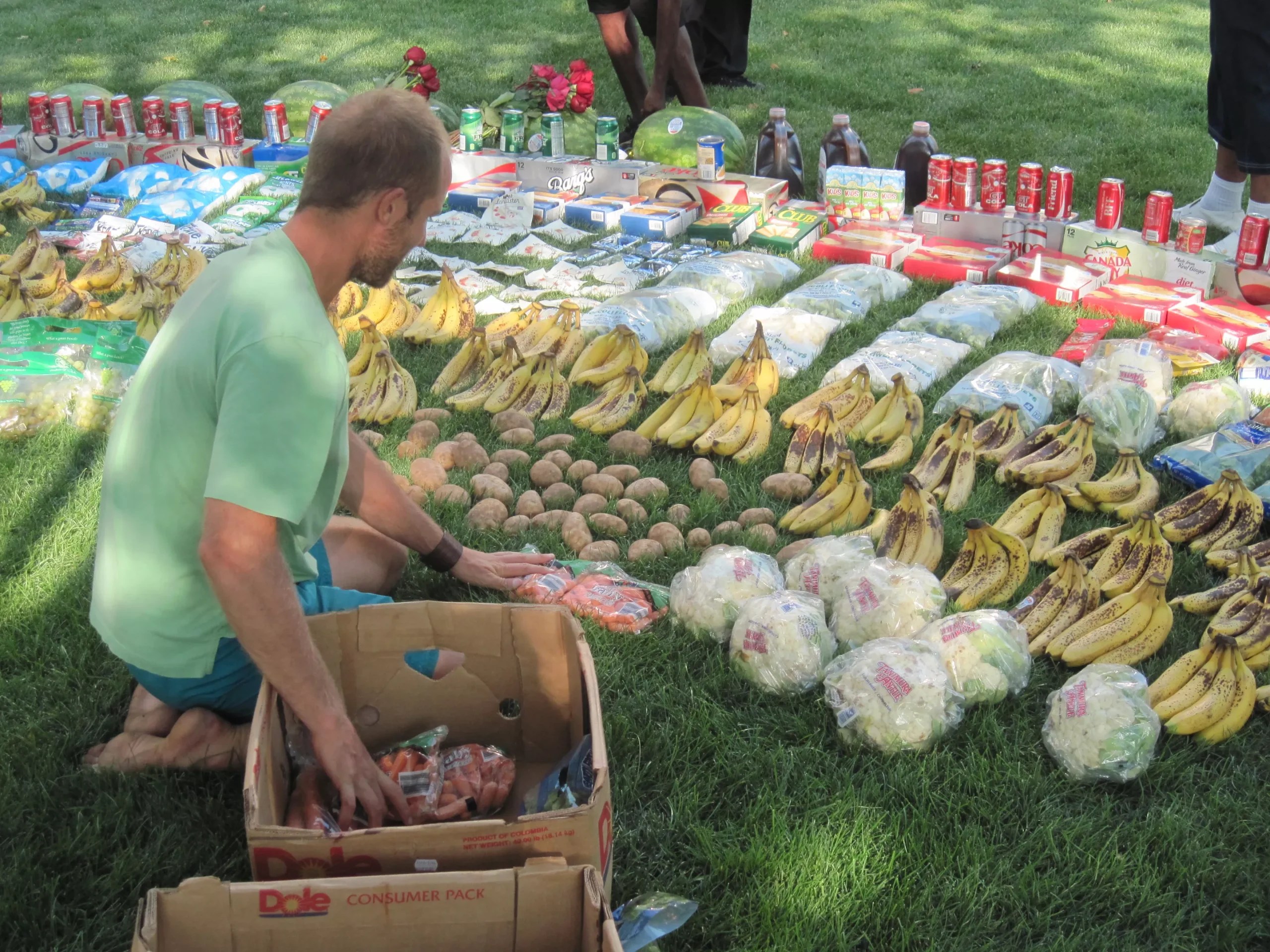
And all this food was free, though that’s not really the point. Greenfield was here, carting boxes of food onto Public Square, to demonstrate the sheer quantity of perfectly edible food that gets tossed into dumpsters behind grocery stores and drug stores around the country. A cornucopia.
Earlier in the day on Sept. 5, Greenfield and a team of Budget Dumpster employees hit up unlocked dumpsters outside Aldi and CVS stores on the westside, along with several other spots. Within, they found plenty of food that was either still edible or, in some cases, weeks or months away from expiring. stain
“When food goes into the dumpsters, it’s all still perfectly good food,” Greenfield says. “Go into a grocery store: Do you ever see bad food on the shelves? No. And it goes straight from the shelf to the dumpster, which means when it goes into the dumpster it’s still really good.” Evidenced by the mountains of sealed snacks and mostly untainted produce, that certainly seemed to be the case.
Given the visual that Greenfield displayed, he said corporate policies should support donating food, rather than dumping it right away. He cited the 1996 Good Samaritan Act, which protects companies from liability when they donate food to nonprofits. That’s the typical retort when people oppose food donations — a concern that companies will be pursued in the courts system. The Good Samaritan Act has ensured that no lawsuits have ever been filed against a grocery store donating its food.
The whole process on Public Square was fairly mesmerizing. Throughout the evening, long after the established press corps in this town had bailed, men and women and children came up to the cache of food and asked what was going on here. Greenfield explained his bit and said that all the food would be given away shortly. Most people said they’d wait. Some welled up with tears at the prospect. When he made the call to give away the food, dozens of men and women picked up groceries and household products. The impact was clear.
Updated with reader input:
This article appears in Sep 3-9, 2014.

Hello everyone!
Please tell your grocery store to #DonateNotDump. Let’s put all this extra food to good use rather than sending it to the dumpster. This solution is good for people and the planet.
Much love to you all!
Thanks for the story Eric and Cleveland Scene!
Great story, Eric!
Awesome article! I’ve been following Rob on Facebook for awhile now…love that he made it to Cleveland, my hometown…what a great story…keep spreading the message, Rob…you are making such a huge difference!
Some stores will allow people to call and pay a small fee to pick up the groceries that they are going to throw away. They usually have to be sorted, like if one strawberry is molding they throw out the whole pack, but there are a lot of good ones left. that is one way to take advantage of it if you don’t have a lot of money and need good produce. Not all stores will negotiate though…