That’s the essence of City Hall’s proposed Shore-to-Core-to-Shore tax increment financing legislation, which was passed by Council’s Development, Planning and Sustainability Committee on Tuesday.
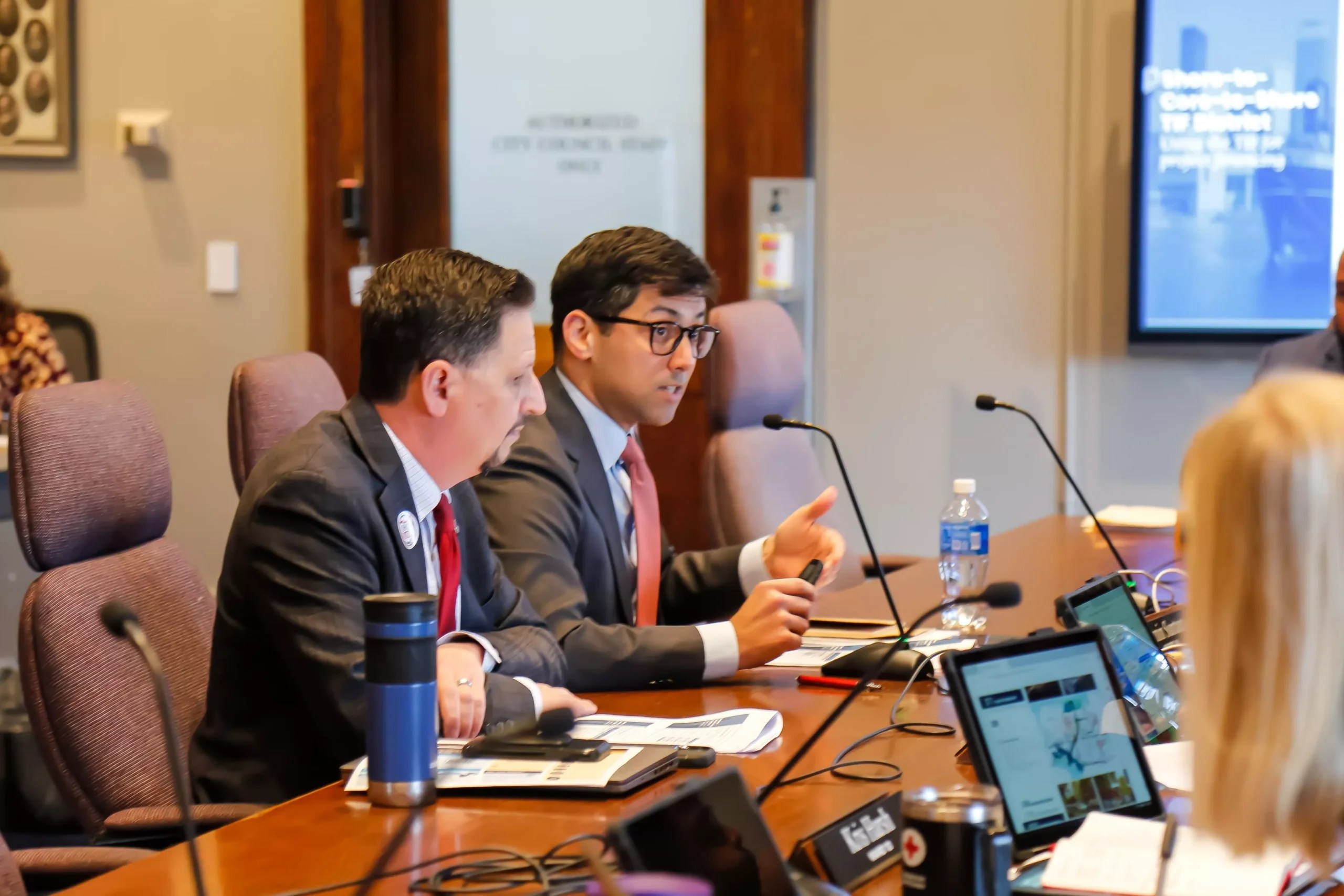
The plan, as detailed by Finance Chief Ahmed Abonamah and City Development Chief Jeff Epstein, would wrap the downtown area—from the Flats West Bank to the eastern edge of Burke—into a special financing district, one that would shovel most of the tax revenue on increasing property values to a special public improvement fund.
As proposed to Council, that burgeoning pool of tax dollars would be intimately tied to a cycle of public-private development: the more hotels or apartments that go up, the more their taxes help re-do nearby streets, or construct new parks. Which, in turn, Epstein argued, will encourage even more hotels and apartments.

“When we make big public infrastructure investments,” he told Committee Chair Anthony Hairston, “it drives private investment and it drives value.”
Quite a lot of value, according to Epstein’s analysis. A projected $140 million in public infrastructure investment—like the lakefront, or Marginal Road bikeway—could equate, in some years, to $1 billion worth of privately-funded builds, of more towers, renovations, of possible soccer stadiums, and so on.
The city wouldn’t have to wait, the chiefs said, for their slice of that increasing tax revenue. Based alone on financial projections for the next three or four decades, the city could take on debt to pay for infrastructure around projects in this decade—say, sewer updates and street resurfacing around Tower City, or the lakefront land bridge.
All which could equal huge change downtown, or elsewhere: $558 million of debt, Abonamad told Council, could equate to roughly $2 billion of expenses in and out of the TIF district.
Though Abonamah and Epstein were clear that their projections were just projections, as is Downtown’s future as a thriving place to live and visit. Property and land values are often telling market indicators of a region’s ability to impress. Especially for Cleveland, which, even with its rebound of foot traffic and waterfront plans, still struggles to compete with the attractive lure of its nearby suburbs.
That historical imbalance, brought about by the flight to the suburbs in the 1950s, was very much on the mind of Ward 3 Councilman Kerry McCormack, whose ward would harbor most of the Shore-to-Core. For McCormack the TIF is, as it is in Columbus and Cincinnati, a tool to reverse decades of disinvestment in Cleveland proper.
“I’m not going to blame anybody or pick on anybody for moving. It’s America. You can live where you want. But I want to frame it in this context,” McCormack said. “For those of us who live in the city, for those of us who were born in the city, for those of us who choose to continue to live in the city—we got to start thinking about us.”
Because the Shore-to-Core would absorb increasing tax dollars, critics have long expressed concerns that such dollars would be taken away from key city entities, like its public services and parks system, to gamble on future infrastructure projects that aren’t guaranteed to result in more permits pulled by developers.

“Let’s be honest about this TIF: It’s a money grab,” he said, reading a prepared statement. “A legal one, but a money grab.”
The two chiefs were quick to answer Stein and Schiller’s concerns: Shore-to-Core tax money, they said, will only be able to be spent on public projects, nothing off private owners. And City Council will have to approve every cent spent, Abonamad said, from the special TIF pool of money created.
So: If we create the right financial perks system, they’ll build it. Then, we’ll build it. And then they’ll build more. Again.
“What I want to reiterate is our premise that without these method investments, that value would not get created,” Abonamad said. “So it’s kind of hard to say we’re giving up a whole lot of future tax revenue right now.
“Because if we don’t do this,” he added, “it’s our belief that the future would not be nearly as rosy as what we hope it will be.”
City Council is expected to make Shore-to-Core-to-Shore law this upcoming Monday.
Blaine Griffin had initially proposed spending half of the TIF’s proceeds on neighborhoods, but in late 2023 reached a compromise with Mayor Justin Bibb and agreed that spearheading downtown development first and not waiting to act was the most prudent path of action. Both pledge neighborhoods, including rec centers, will eventually see investment from the fund.
If passed, Epstein told Scene that Shore-to-Core TIF district fund would be created and utilized by the end of 2024.
Subscribe to Cleveland Scene newsletters.
Follow us: Apple News | Google News | NewsBreak | Reddit | Instagram | Facebook | Twitter | Or sign up for our RSS Feed
Subscribe to Cleveland Scene newsletters.
Follow us: Apple News | Google News | NewsBreak | Reddit | Instagram | Facebook | Twitter | Or sign up for our RSS Feed
Related Stories

Bibb’s Proposed ‘Shore to Core’ Downtown TIF Could Collect Billions. Council Wants Half to Go to Neighborhoods

Proposed Shore-to-Core TIF Passes Through Cleveland City Planning Commission

Cleveland Finance Director Ahmed Abonamah Resigns

City Council Approves Special TIF District For Bedrock Riverfront Project, Promising Up to $1 Billion in Subsidies

For the Future Impact of Downtown Cleveland’s Shore to Core TIF, Detroit Offers Some Clues
This article appears in Mar 13-26, 2024.